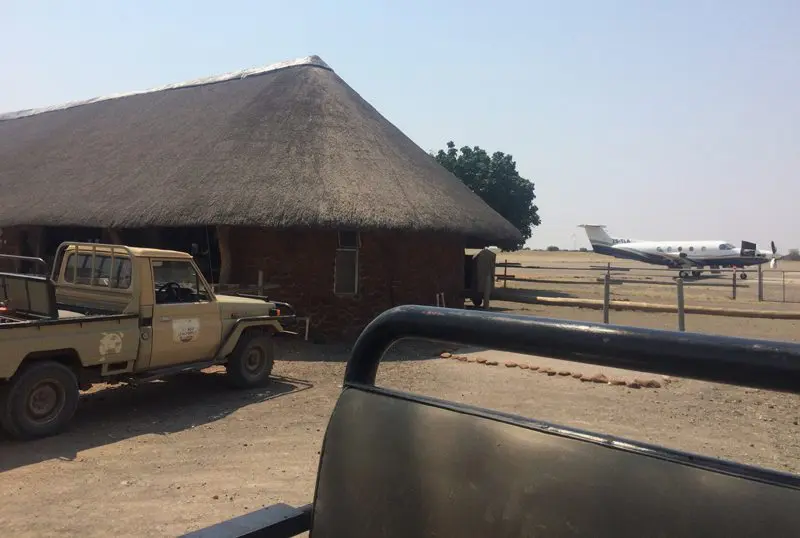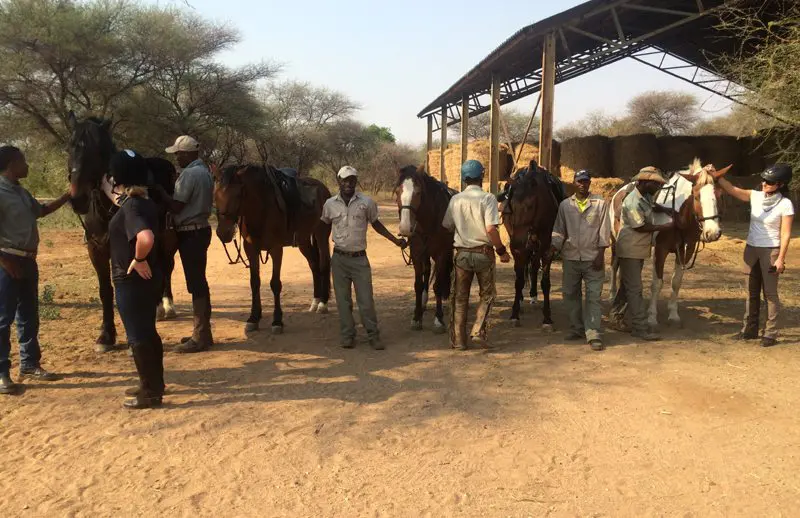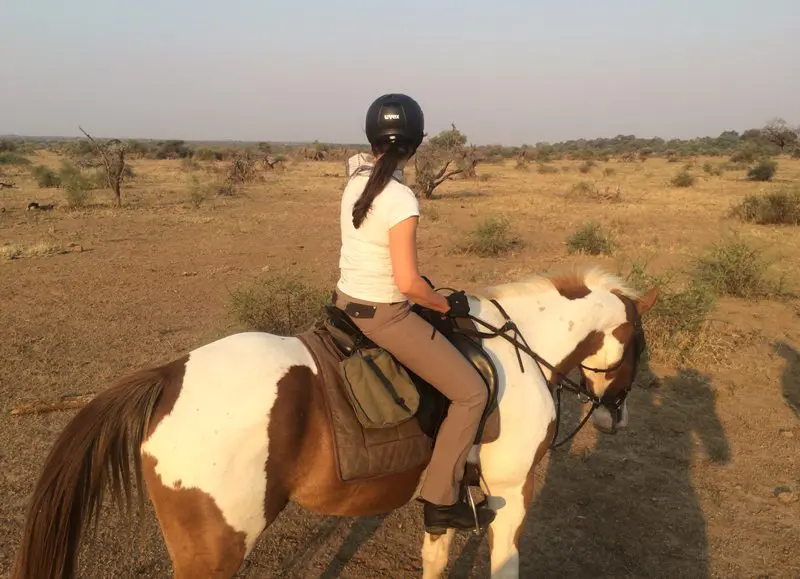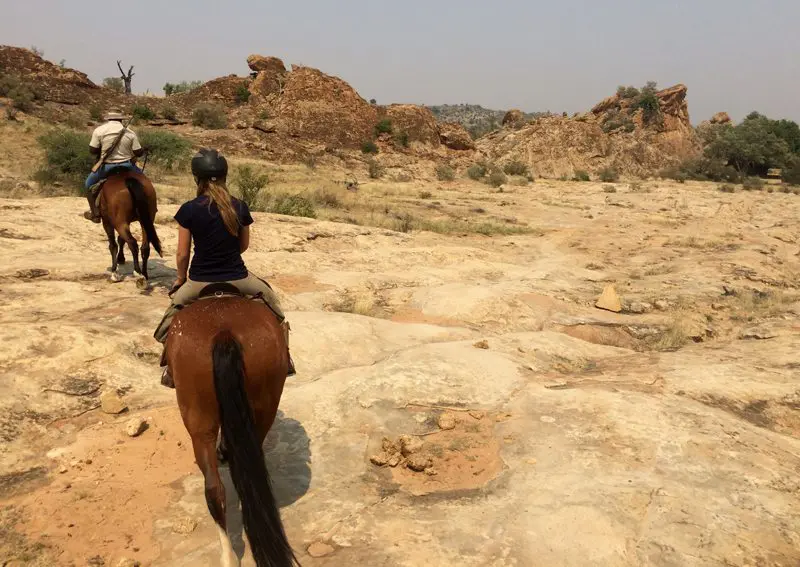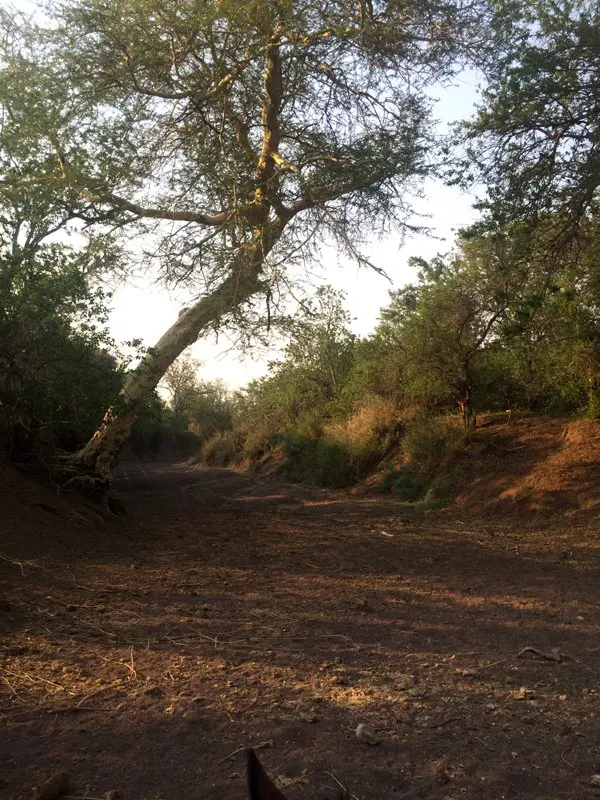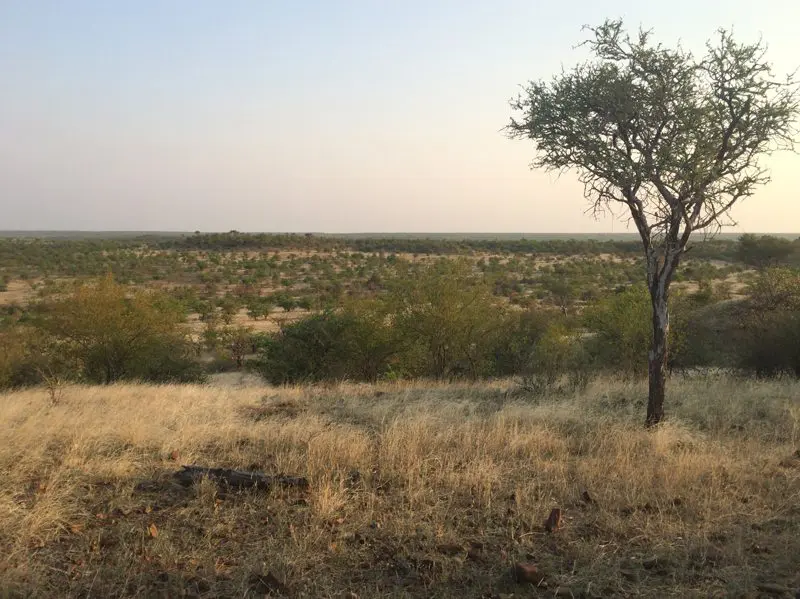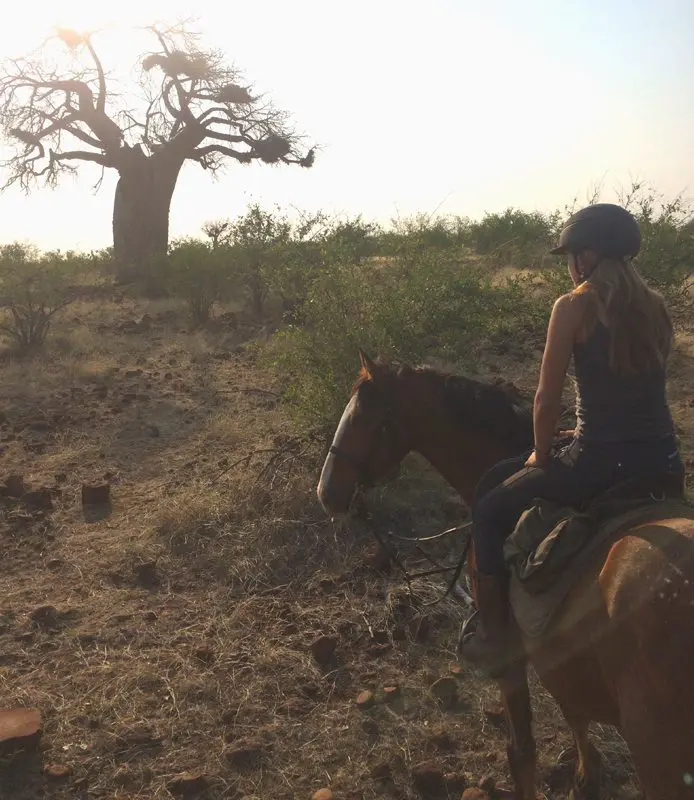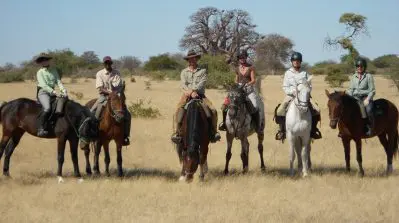

The starting point for the Tuli Safari is right over Botswana’s border with South Africa, in the extreme east of the country, on the banks of the Limpopo River. The riverbeds were dry while I was there in October, but when the Limpopo is running, guests and supplies that arrive by road are shuttled across the mighty river in a cable car. You can also arrive in the reserve by plane to the small local airstrip, most convenient and also very atmospheric to go through the easy process of customs under the open airport’s thatched roof. However you reach base camp, you will be treated with the greatest hospitality upon arrival. We were given a cool drink and had the opportunity for a meal and to speak about our riding background so that the best match could be made with our mount for the week. As it was perhaps the hottest time of the year while I was there, it seemed unappealing to dress in the layers of riding clothing, even after the cool shower I took before getting ready. All lack of ambition quickly fled, however, when I got to the barn and saw the beautiful and fit horses ready and waiting to take us out.

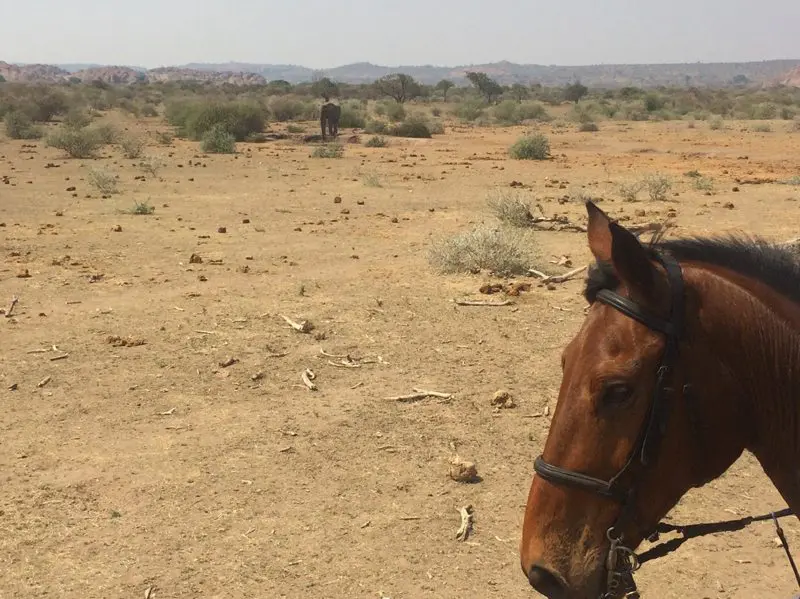
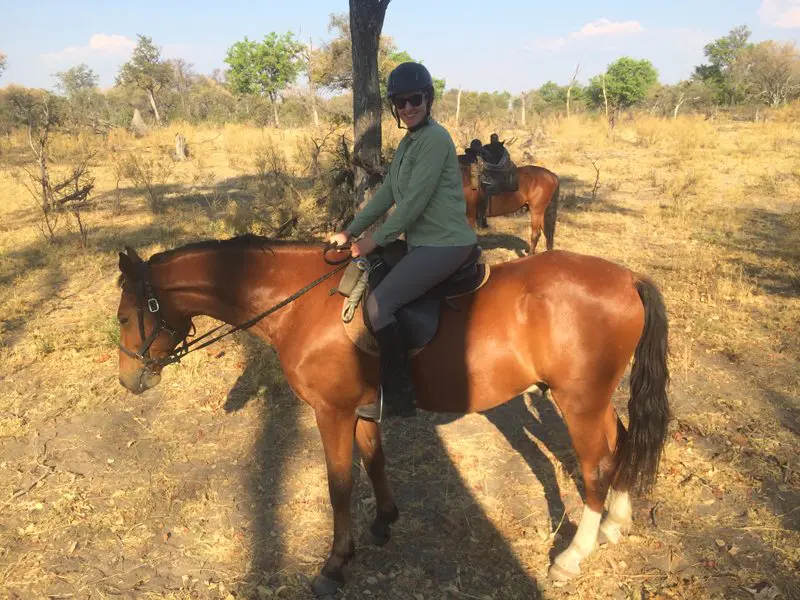
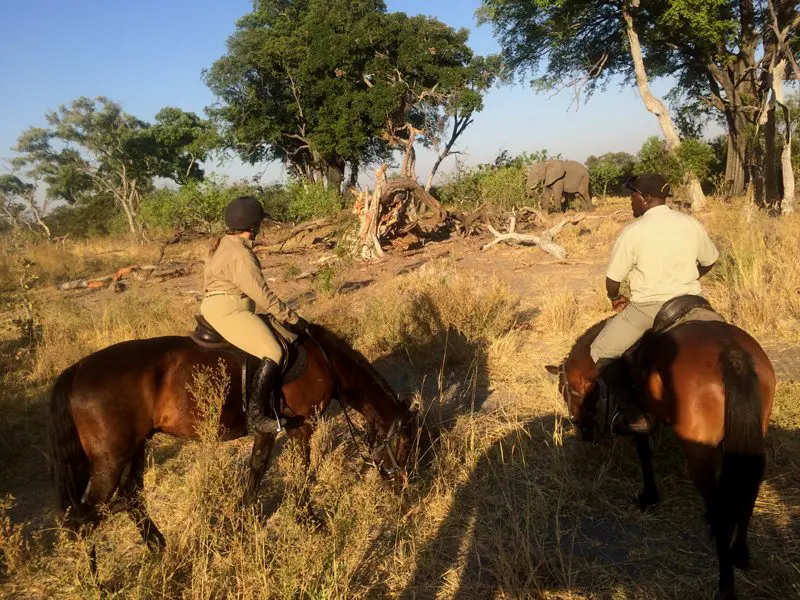
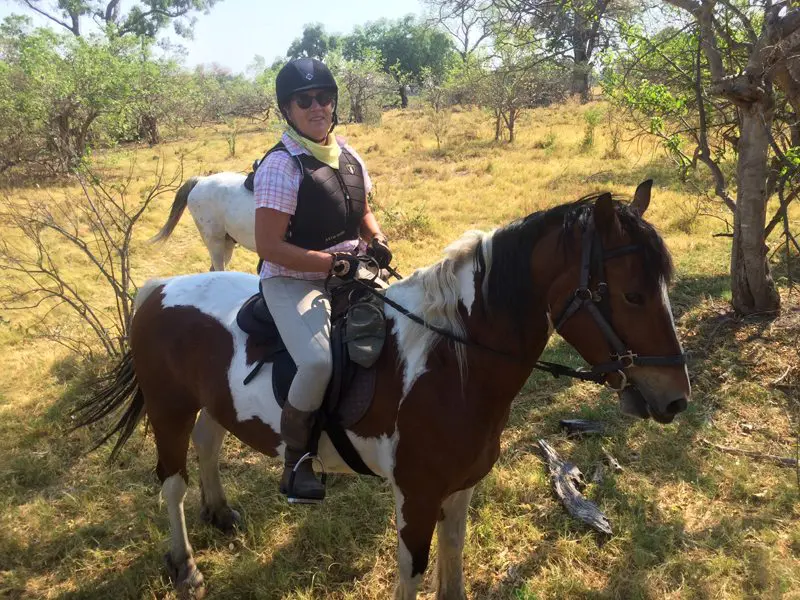
The horses are a variety of breed, size, age and experience, from the imposing Shire/Thoroughbreds to my more compact Boerped mount. There were also Fresian, Warmblood and Paint crosses. All have been trained extensively on the flat and are well educated in dressage and also jumping. Many compete in eventing as well as going on safari, and it is a wonderful treat to ride such responsive and well-trained horses. Before heading out on the first ride each rider has a short test run – cantering a triangular shape away from the group and back again. It’s a great opportunity to be sure you are comfortable with your horse, and I was already impressed by how happily they all did this small piece of independent work. The daily riding was somewhat challenging, perhaps especially because of the heat when I was there, but the horses’ fitness was impressive after several days of 5-6 hours of riding, complete with long and steady canters. We also had the opportunity to jump on the trail, usually small logs of the mopane trees downed by elephants. As someone who simultaneously loves to jump and is also terrified of it, it was a huge pleasure to have the opportunity to ride such fabulously educated horses that made it easy and fun. My horse, Ajax, was also rock steady around all the game and hardly even flinched at the movement of nearby elephant or the unexpected flight of a bushpig.
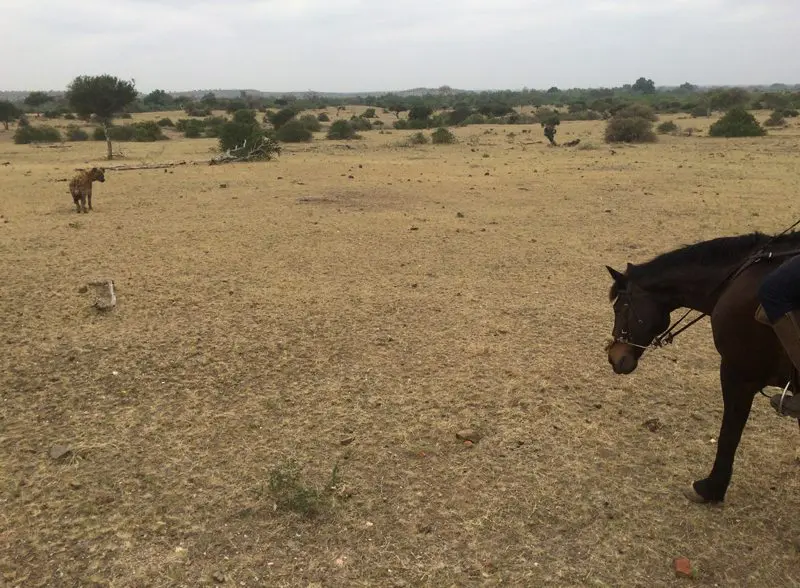
Hyena and Horse

Hyena and Horse

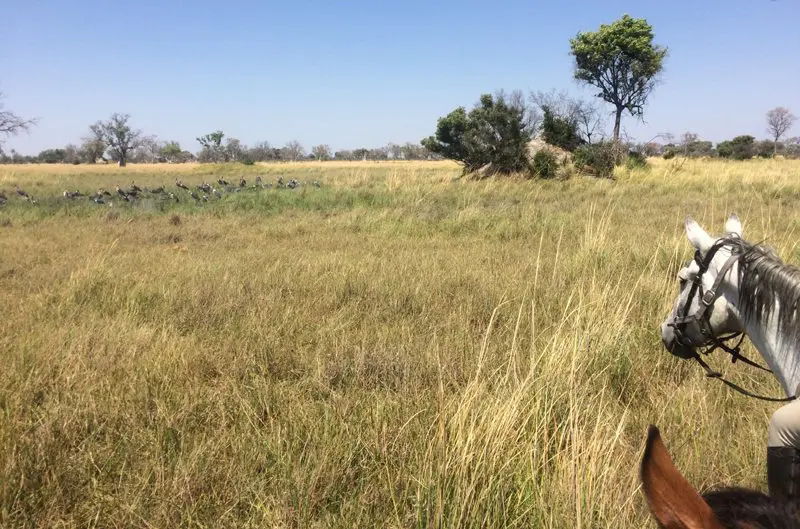
And game we did see! Although it sounds like it may be an overstatement, it truly is not to say the experiences with wildlife were magical. On our first ride a seemingly endless group of elephants passed in front of us; a breathtaking introduction to what would become a common sighting. The next day we watched a cackle of hyenas near their den, neither they nor our horses apparently nervous to observe each other.

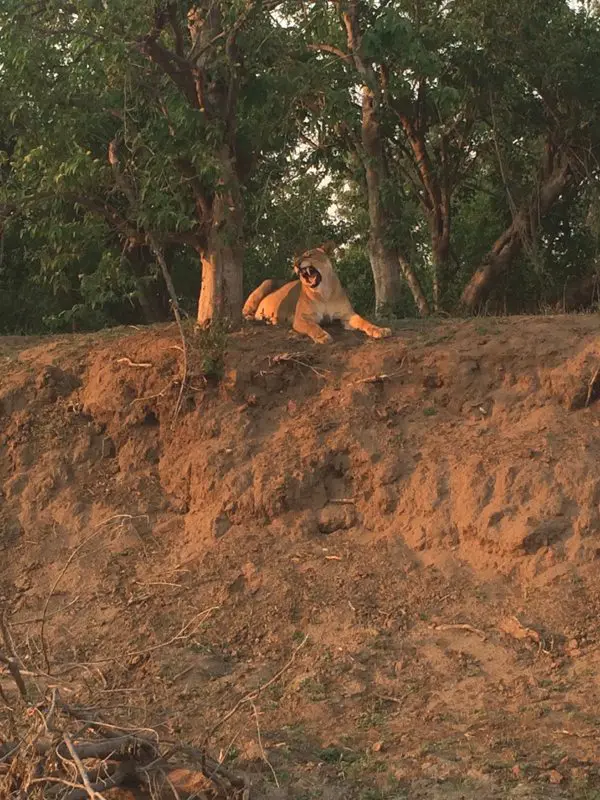
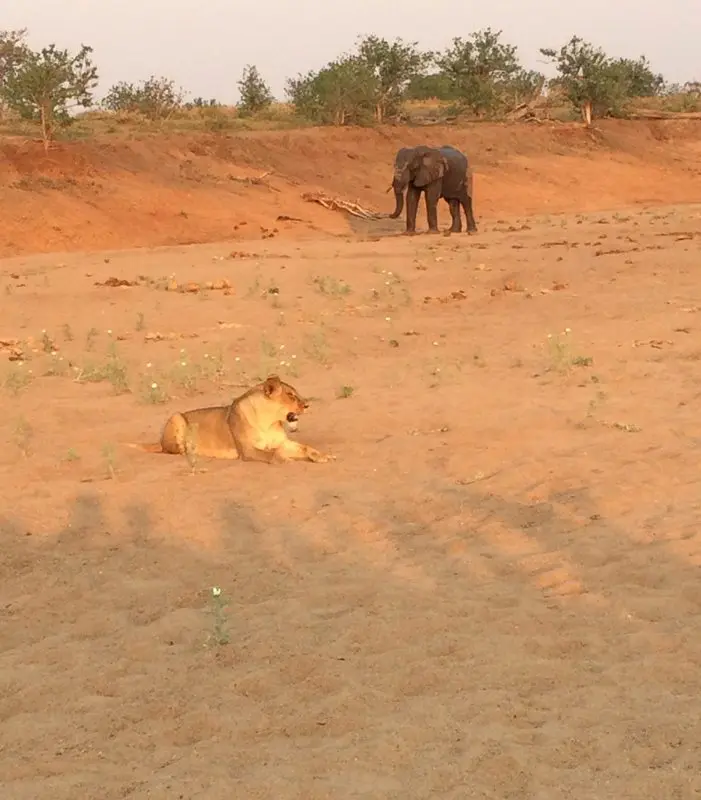
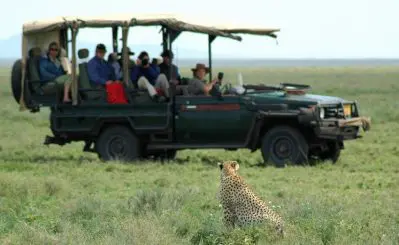
We crested a hill dotted with baboons to see zebra, giraffe, and wildebeest on the other side. Cantering through the mopane and acacia we were joined by zebra, and a lone wildebeest then continued to cavort just ahead of us. In the evening by game vehicle we found a single lioness watching an elephant at a water hole and later when darkness fell we found a family of cheetah by spot light.

We were utterly surrounded by animals in the otherwise completely empty wide open spaces dotted with mighty baobab trees and dramatic rock formations.

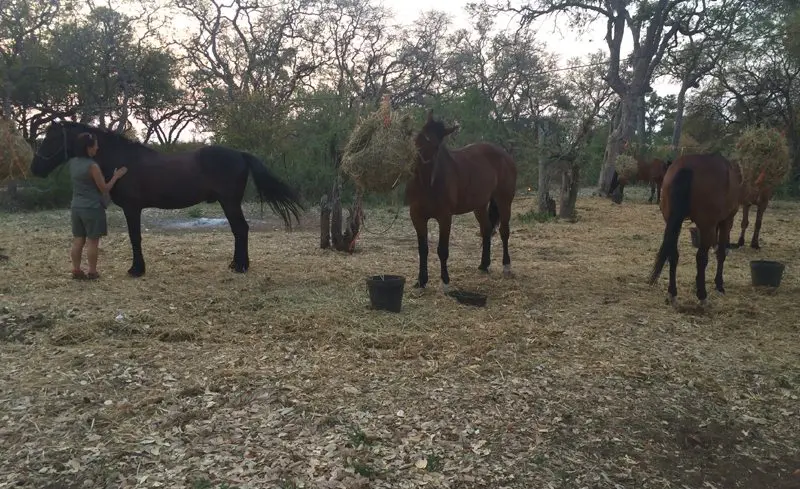
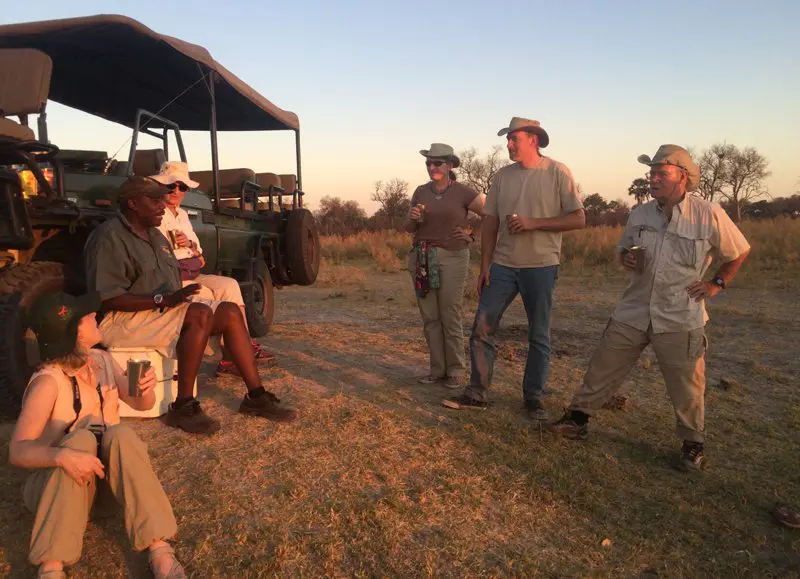
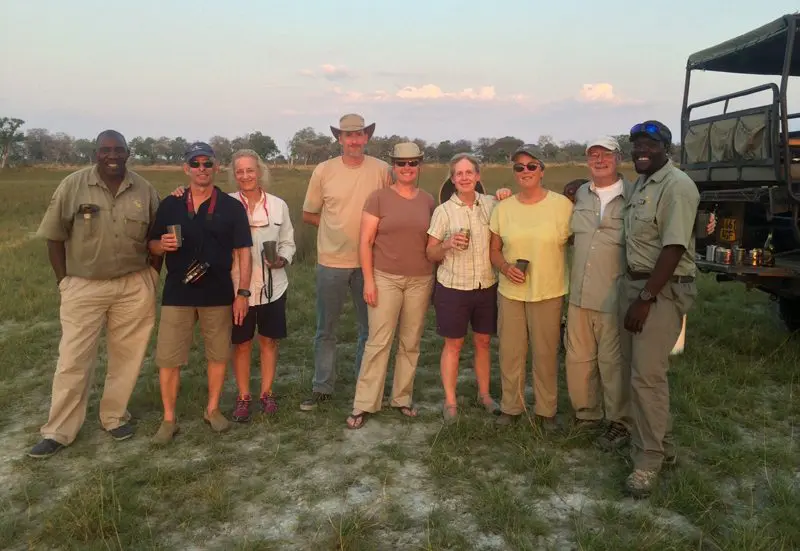
Given this environment replete with predators, I nevertheless always felt completely safe due to the careful professionalism of our guides and their backup team. West, the lead guide, and Tsoane, the backup guide, were both superb riders and game spotters. They were very knowledgeable of the flora and fauna of the area, and I loved learning about the pheromone defense mechanism of the mopane trees and the matriarchy of the hyenas. Soft spoken, yet with a commanding air of confidence, I would’ve felt comfortable following West anywhere, and did – by horseback, on foot and by vehicle. While they carried rifles, they told us that they had so far never had occasion to use them, but had in the past made good use of the bullwhips they also carried to threaten animals away. It was clear though that they preferred to not get into a position where such action was necessary, as they were constantly carefully evaluating our surroundings, even while the rest of us enjoyed sundowners, watching crocodiles disappear in their pool at the base of a tower of rock. At night someone from the team of grooms would always be keeping watch over the horses inside of protective electric fence, and guests were all escorted to their tents at the end of each evening.

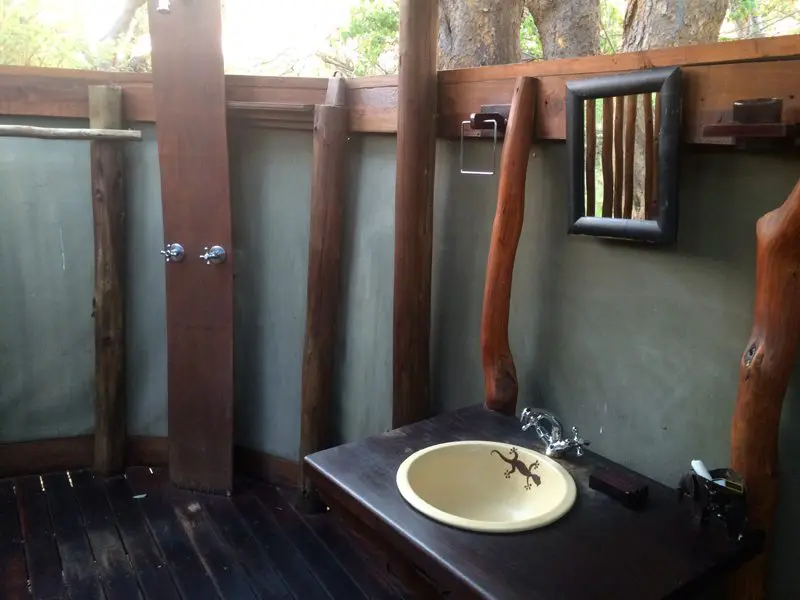
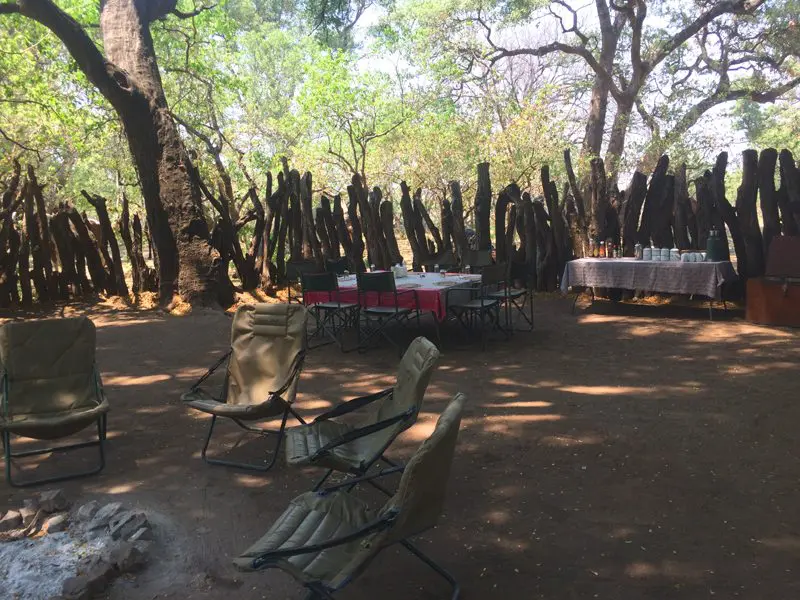
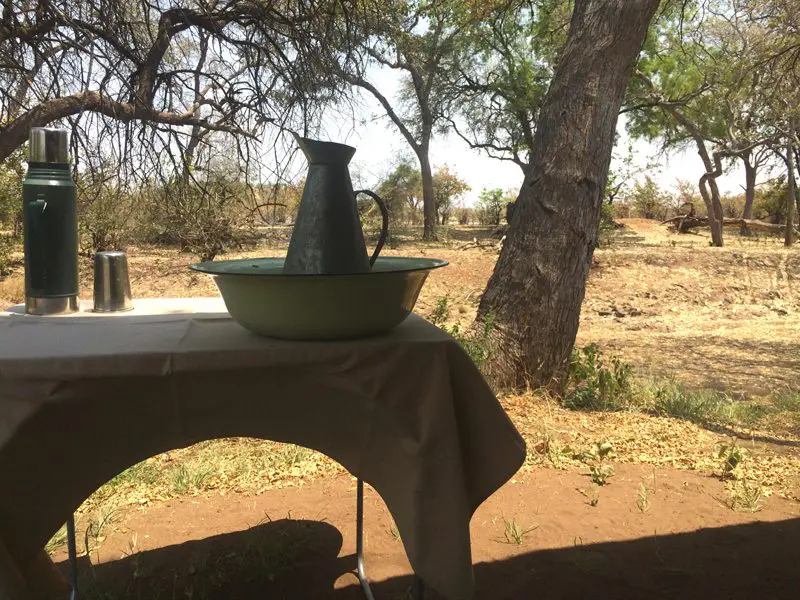
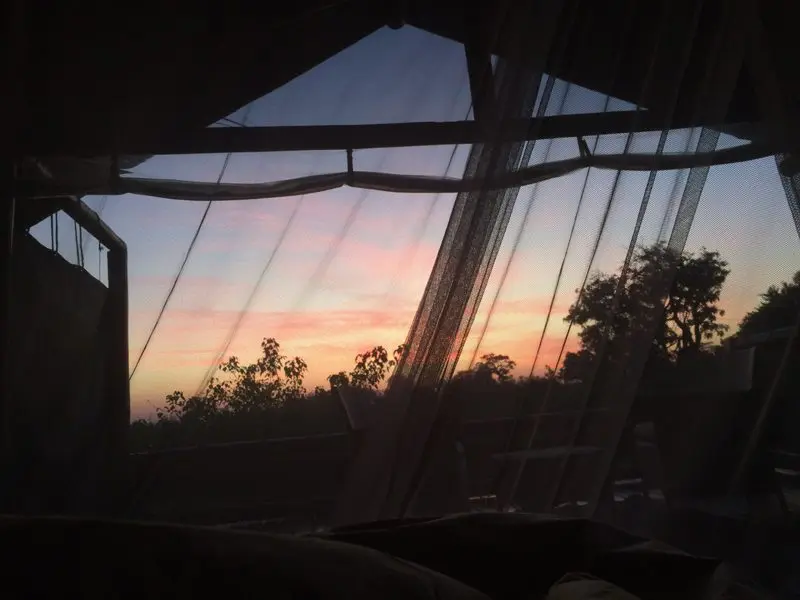
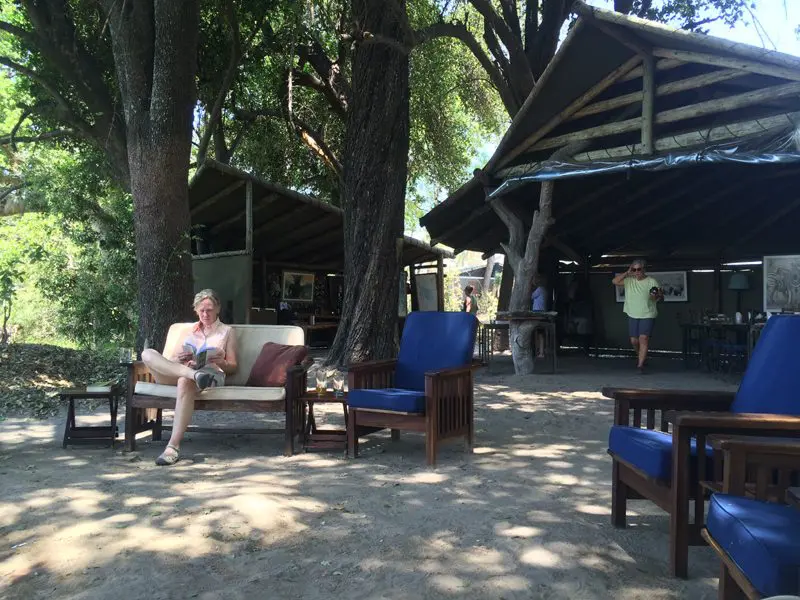
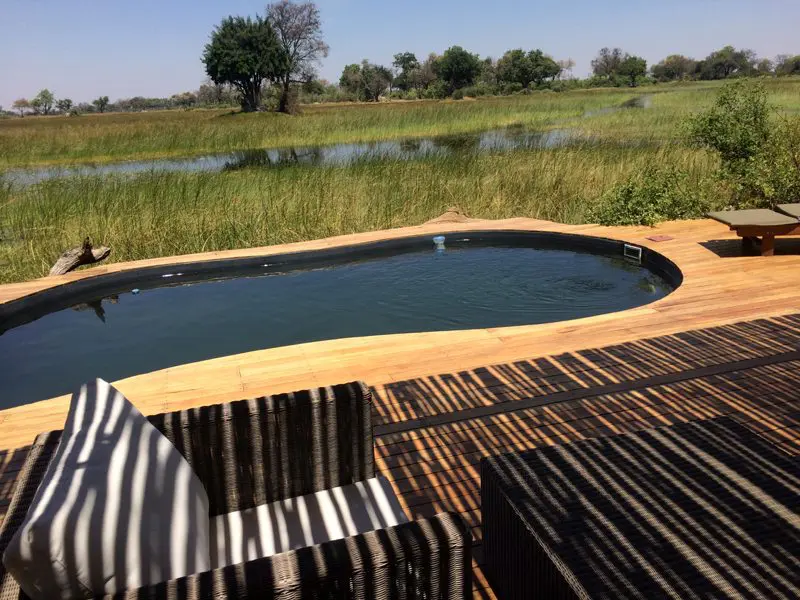
The tents and camps were very comfortable, and you get the chance to use several and thus see different country. There is a permanent camp where we spent several nights, complete with plumbed bathrooms and a pool for total comfort. The mobile fly camps are also comfortable – set up ahead of time by the camp team, so that all you need to do is leave a zipped bag in your camp and they take care of the rest, including setting up individual drop loos and a shared bucket shower. You spend two nights too in an open air camp, within the circle of a former tribal court under the shade of a large mashatu tree. This is also home to several families of vervet monkeys, who provide endless entertainment from the branches above you.
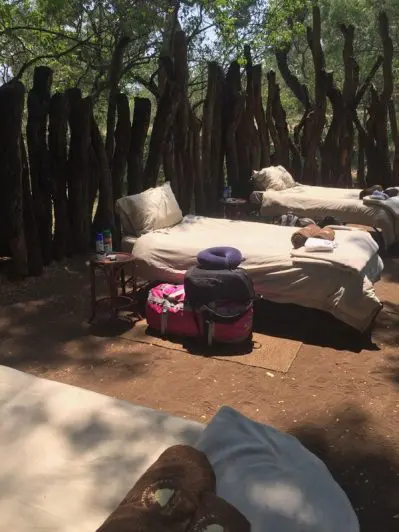
Our camp under the stars (and trees)

The Tuli safari operates in a wonderful location, giving us riders a varied experience with African wildlife. Additionally, the superb attention to detail regarding safety, the training of their horses, and the appointment of camps made the trip truly unforgettable.

By Megan Barrett
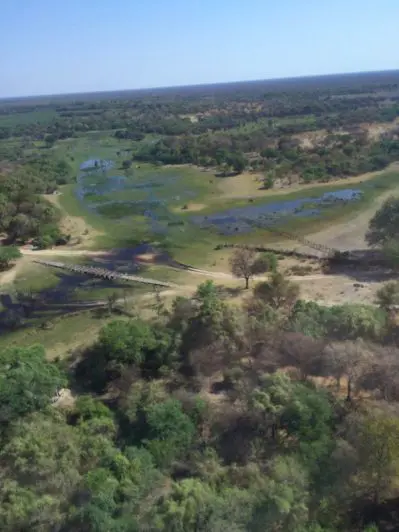
Flying in on a helicopter it’s easy to see where the Okavango Delta begins, a startling oasis of green surrounded by stark desert. As we entered the delta from Maun, the pilot pointed out the “buffalo fence” designed to keep livestock and wildlife separated, but noted how elephants cannot be counted upon to respect the boundary.
Botswana boasts the most concentrated population of elephant anywhere in the world, and they were nearly ever-present during the safari, starting with the glimpse of them from above.

Entering the delta by helicopter

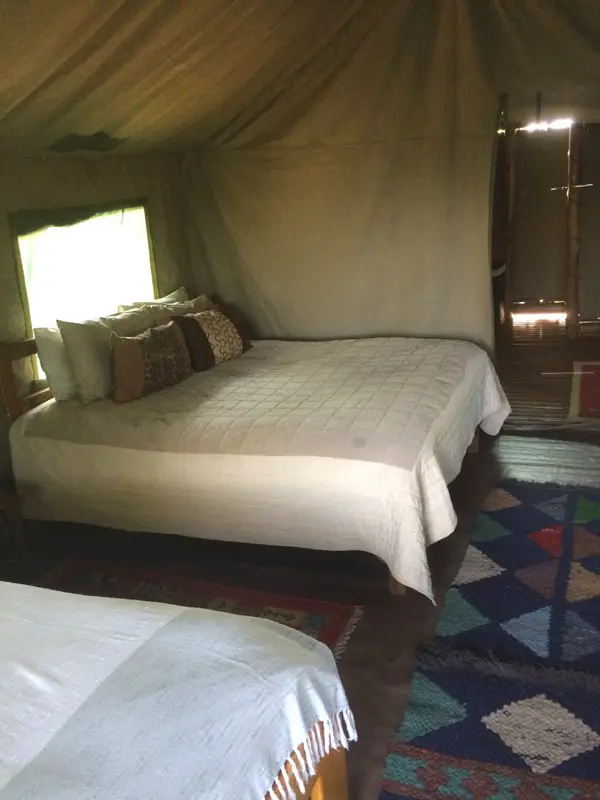
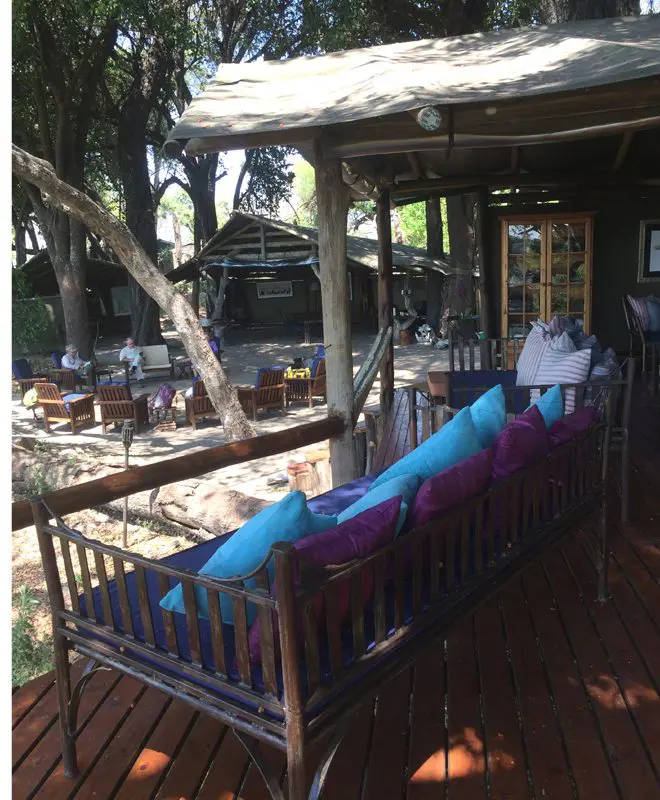
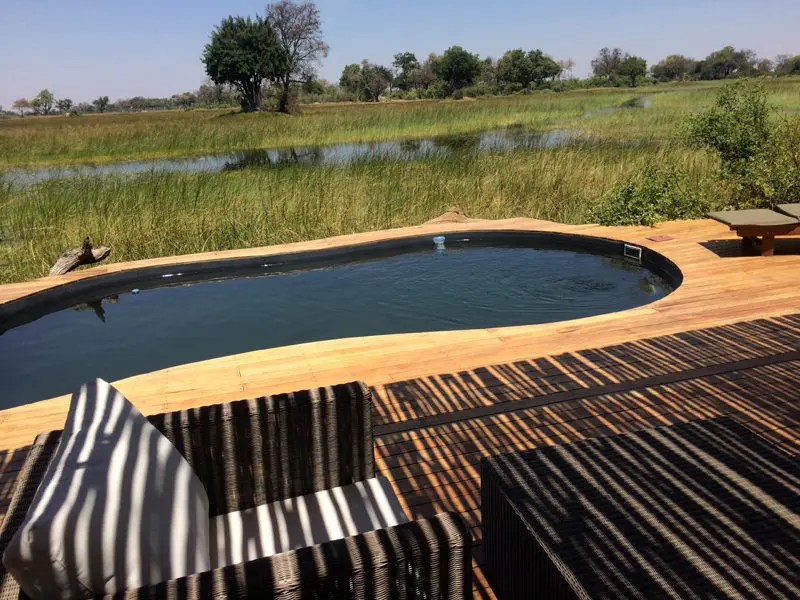
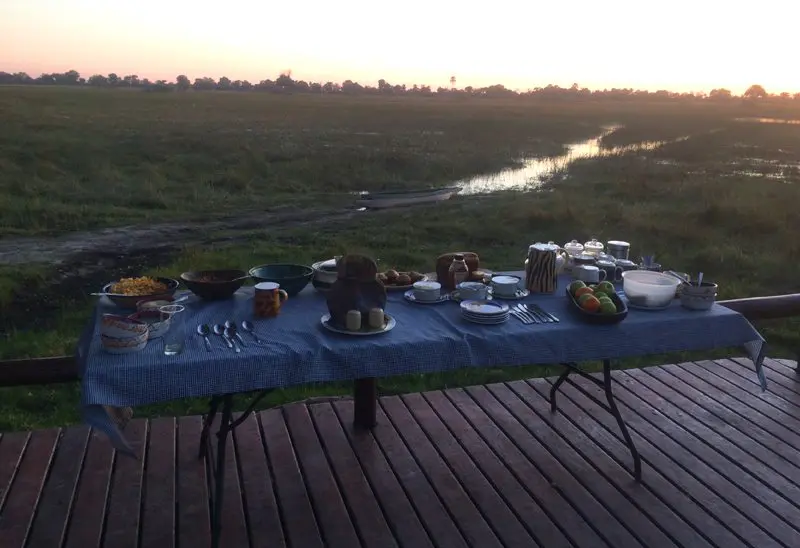
Landing at Kujwana camp, we were greeted by the camp staff who would provide consistent hospitality throughout our 10 nights (upon leaving at the end of our stay we joked how it seemed so strange to no longer be offered drink and food during all our waking hours!). Kujwana is the permanent base camp from which the Okavango Safari operates, with facilities for horses, guests and staff year round. On the edge of a river, it affords lovely views over the plains that become flooded during the water’s high season in the summer months. The camp is incredibly comfortable, with lounging spaces and a pool, a dinner and bar tent, and spacious personal tents with en suite bathrooms The camp also offers a charging station and some wifi access; affording every comfort of home and then some! We were often visited by a young bull elephant who seemed quite interested in the camp scene, and vervet monkeys who dashed about and chattered from the trees and dining tent roof. Each morning we’d be awoken at 5am with a tray of tea and coffee brought to our tents, then we watched the sun rise over the delta while eating breakfast together, so we could next mount up early enough to beat the October heat.

The horses have wonderful lives in the delta, grazing in the rich green grass and being carefully protected from predators. Many are home bred, most descending from an Saddlebred stallion who, although now retired, is still the herd leader. These “Botswana Warmbloods” are beautiful, with great size and temperaments.

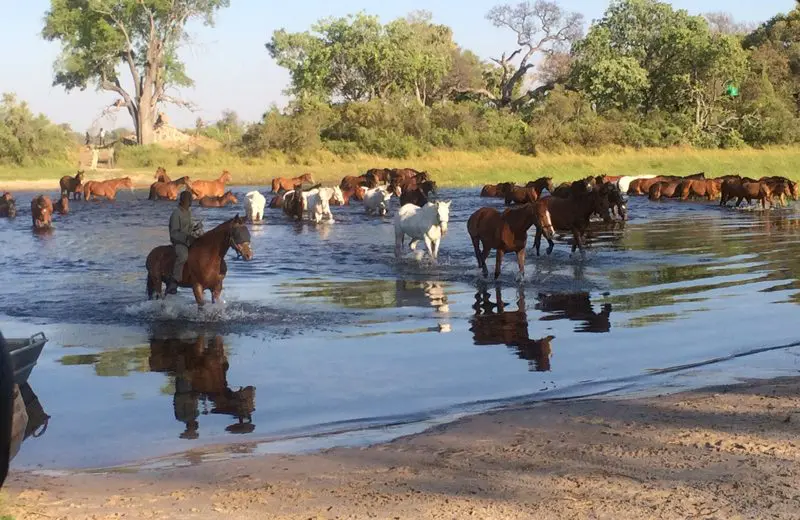
The outfitter also uses Thoroughbreds, Arabians, Friesian crosses, Clydesdale crosses and local African breeds. The tack is of wonderful quality, and never have I been so comfortable riding, as I was fully pampered with a seat saver and well-fitted equipment. Morning rides followed the trails of buffalo, giraffe, and of course, elephant, and although we were there when the delta was at its lowest point, we still crossed wet areas which are home to lechwe and reedbuck antelope. I know I was not the only member of our group to be giddy with childlike joy when we took these crossings at a canter, getting a cooling splash as our horses moved like they were flying.

We’d have some breaks from riding, to both walk and for some refreshment, before returning home to camp for lunch. The food was excellent and would be followed by a long siesta of napping or relaxing in the pool. We’d be fed yet again for tea at 4pm before going out for an evening game drive with sundowners before our evening candlelit dinner and well-earned rest.

Stories and Sundowners

Stories and Sundowners

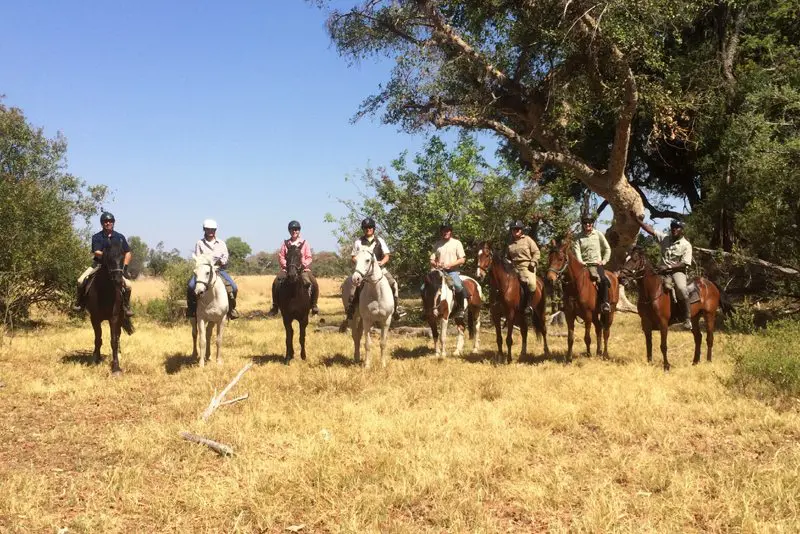
I had some of the most exciting moments by horseback of my life riding in the delta – elephants shaking their heads and flapping their ears at us, considering a mock charge, or even more terrifying to our horses, ground birds startling up from beneath their hooves. One morning in the path ahead I saw a feline character: “A leopard!” our guide, Rodgers, told us, and we trotted behind him as he went to get a better look. He saw that there were two, and they went off into the tall grass to our left. Knowing that a leopard is not likely to be aggressive toward a horse in the way that a lion would be, Rodgers ventured into the grass to try to flush one out and away from us so that we could get a better look.

Video from Sascha Abramson’s GoPro

We waited tensely, with reins shortened, eager to see what Rodgers would find. While he had been focusing on the leopard he had seen crest the small hill, he hadn’t realized the second was right beside his horse, laying low until he ventured right near it. Out it sprang from the tall grass, with a deep and rumbling roar as it burst towards and quickly by us. The horses had scattered, but upon hearing Rodgers telling us to look quickly, I turned in time to see the elusive form streak past. The whole group burst into adrenaline fueled laughter as Rodgers began recounting the event, telling the story that would be relived often during the rest of the trip.

Another morning we had just dismounted to walk the horses to rest them a bit when Rodgers spotted a wild dog up ahead. He excitedly bade us to all mount up again and off we went on the trail – they are infamously hard to find and seeing this group on the hunt was an exciting spot. We followed them for as long as we could, getting a good glimpse of several in an open meadow before they disappeared in the search of their own quarry. On an afternoon ride we encountered a huge herd of about 300 Cape Buffalo. They’re intimidating creatures, as they trot inquisitively toward items of interest with their huge horns hanging. We stood and observed each other for a few wonderful long moments before the herd took off, and we cantered along beside them.

We spent a long morning game drive on a futile quest to find the few rhinoceros known to be in the area. We couldn’t find anything more than their tracks until the next day on horseback when we stumbled across a mother with her calf. Off Rodgers went again, on a merry chase trotting and cantering to get a glimpse of the great ungulates.

For three nights our home was at Mokolwane Camp, a full day’s ride away, which allowed us to have a wonderful picnic lunch on the trail complete with swimming in the river on the way to and from. Mokolwane is a type of palm tree common in the area, of which you can have wonderful views from the amazing tree house tents. These tents are on platforms 10 feet of the ground, the front wall totally open to the sounds and views of the spectacular country. I watched an elephant browse right below me, and baboons calling and traveling only a few feet away. The sounds of nature were amazing here, and it was unbelievably beautiful to wake up to the sunrise seemingly right there in the tent with you.

So many aspects of this trip were so special and entirely unique:  access by helicopter to see spectacular bird and wildlife, guides who were so knowledgeable about the area, the game drives that allowed us to get great views of animals like lion, and the island like location of the camps that meant we crossed by mokoro (canoe), boat or horse, adding additional fun to the exotic experience. The camps were so fabulous that I didn’t want to leave, and the opportunities for excitement and relaxation both made this an African adventure to always treasure.

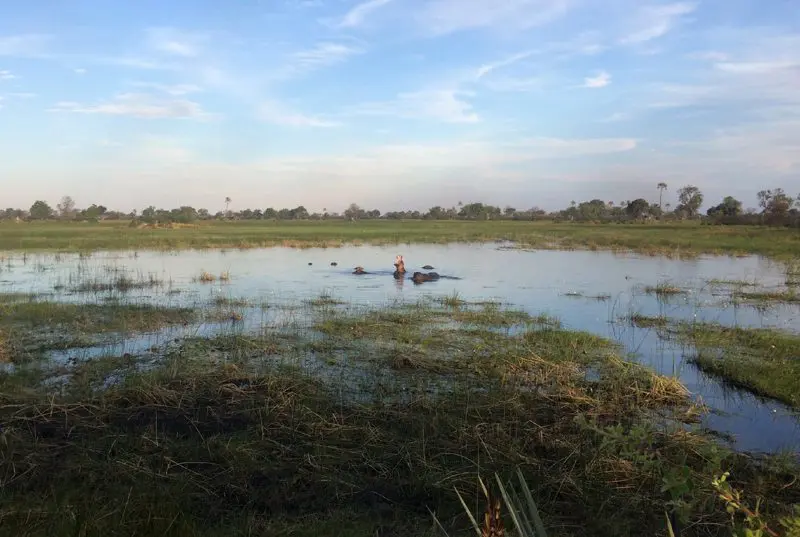
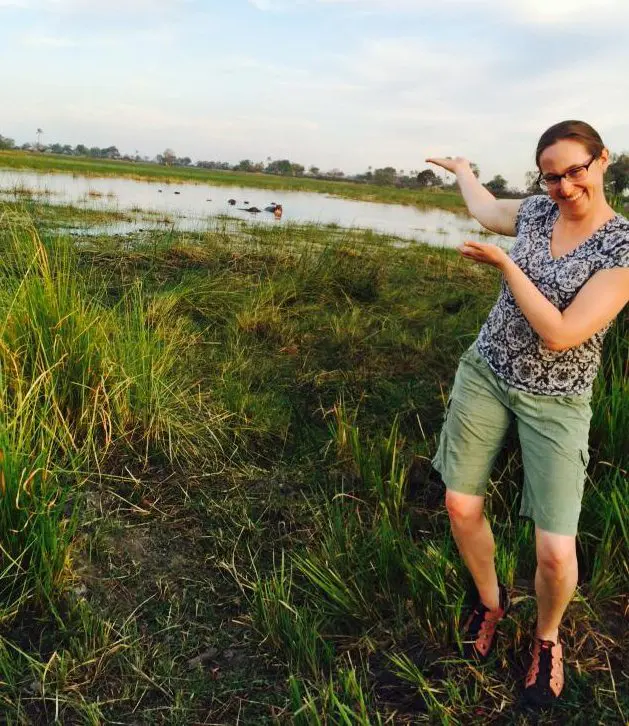
By Megan Barrett, excited watcher of hippos

By Megan Barrett, excited watcher of hippos

Riding the moors of England

The Camel Trail on the way to Blisland

The Camel Trail on the way to Blisland

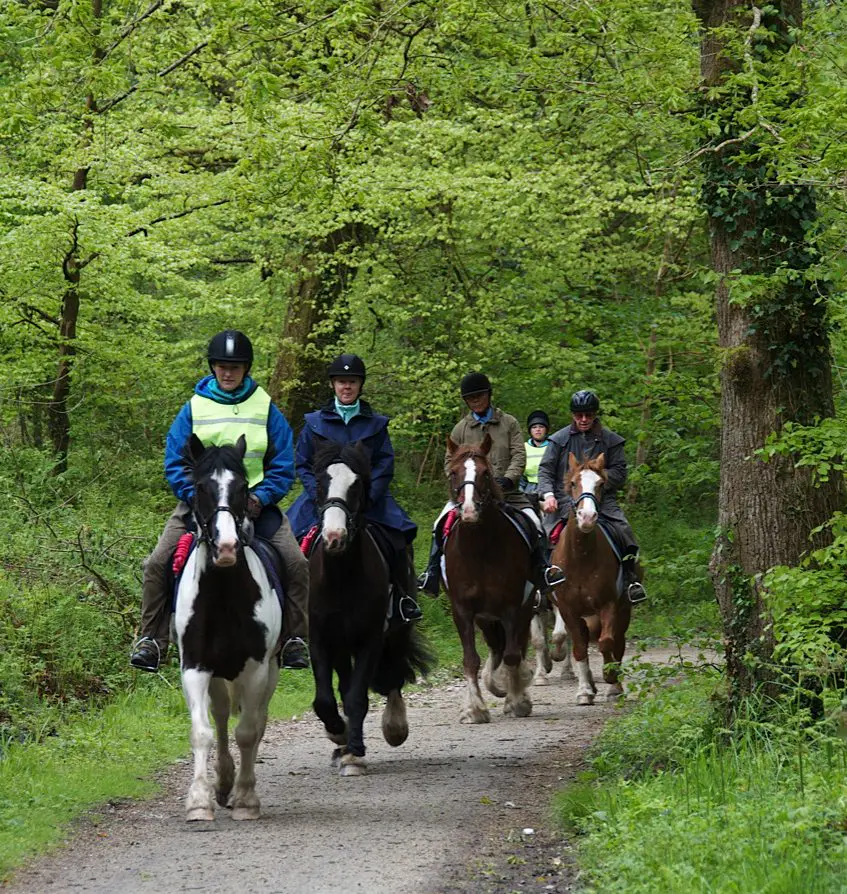
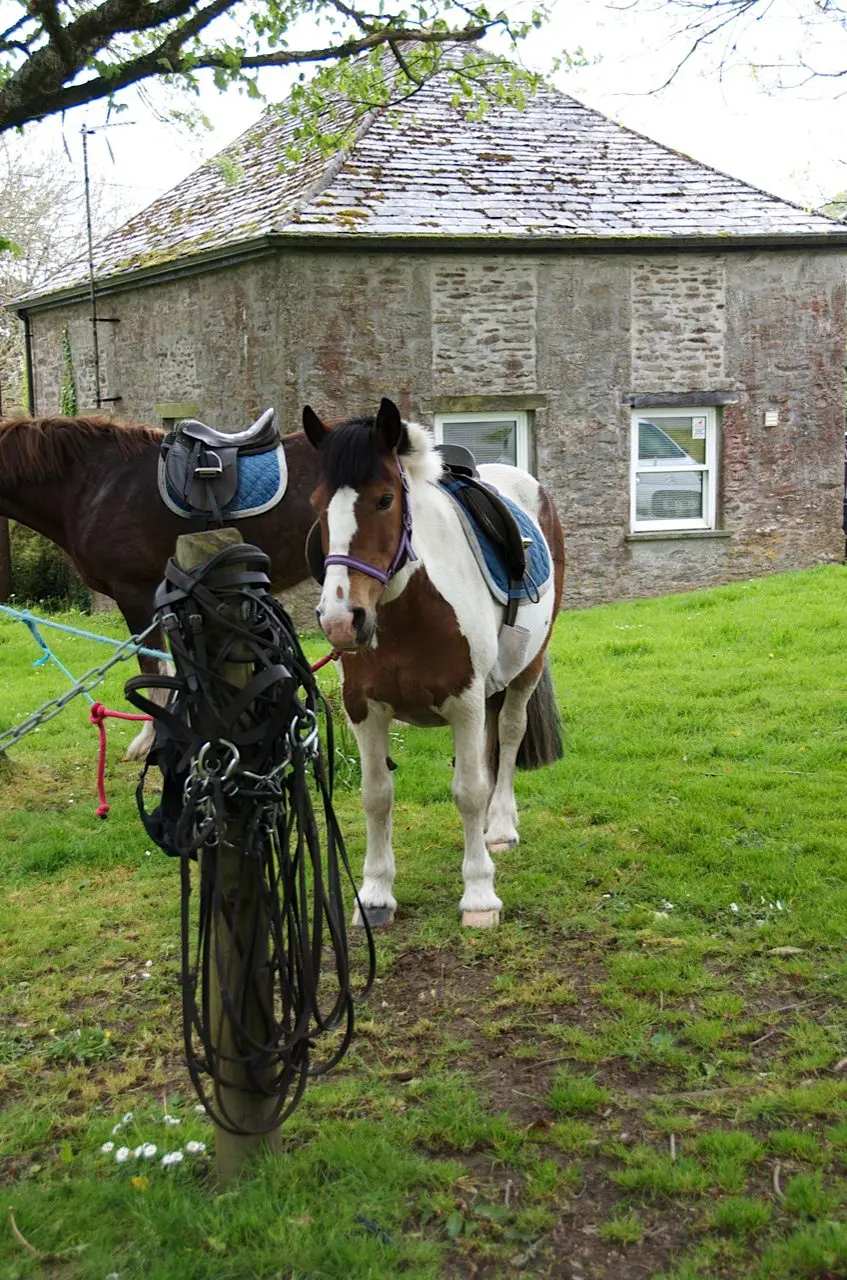
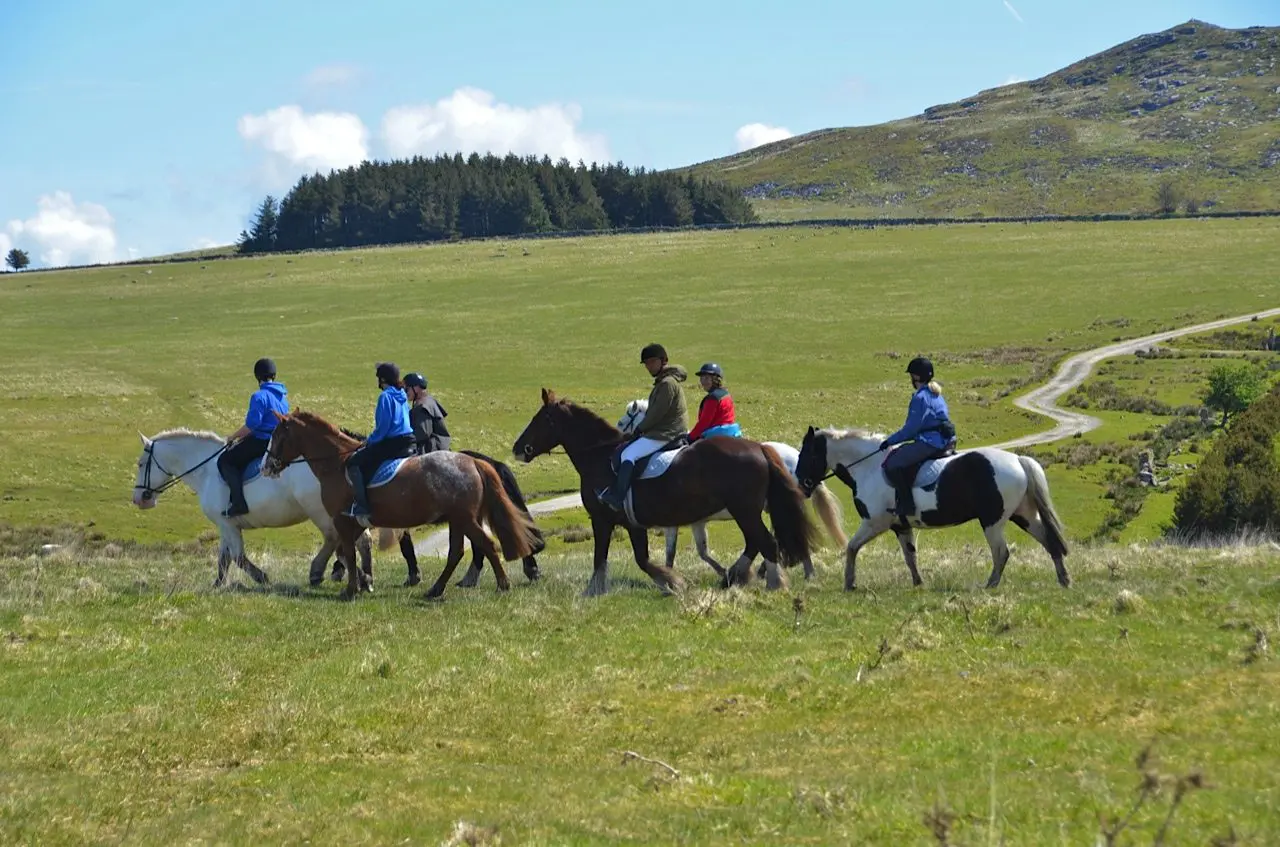
Monday’s trail along the wooded valleys of the Camel Trail to Hellandbridge and beyond was simply magical. Clouds were still rolling in and out but the secluded valley and the tree-lined trail offered shelter from the wind and the changing weather. Some of the trees were adorned with fresh buds and leaves and everything shone in different hues of greens – a stark contrast to the ride across the moorlands the day before when we experienced everything from windblown rain to hail. This welcome to Bodmin had left me quite cold and wondering what the week would hold in store for us, especially in terms of weather, and so the variety that the next day offered was a welcome development. The beautiful blue sky and warmer weather allowed us to sit out in front of Blisland Inn for lunch, across from the village green where the horses were tied up and also enjoyed a lunch snack of fresh green grass. Afterwards we explored the village church before heading back to the riding stable via Jubilee rock, a huge granite rock with carving that were started in 1809 and 1810 by Lieutenant John Rogers and his men to commemorate King George III’s jubilee. It features Britannia and various Coats of Arms and is updated with new carvings on special occasions.

Riding on the moors

Riding on the moors

Our week in Cornwall started on Saturday, when upon arrival by train from Paddington we were picked up by Tone, the taxi driver who would provide transfers for us during the week to the different pubs used for evening dinners. Once we had settled into our accommodations in one of the cottages at the riding stable we enjoyed lovely scones and clotted cream and hot tea, a wonderful refreshment after a long travel day.

Sunday was the day the moor tested us during the introductory ride with very windy, wet and cold weather, although our return to the stable and cottage provided us with a warm lunch of cornish pasties. We must have past the test of the moor as the weather was considerably better on Monday and from Tuesday on we lucked out with beautiful sunny and clear skies and much warmer temperatures for the rest of the week.

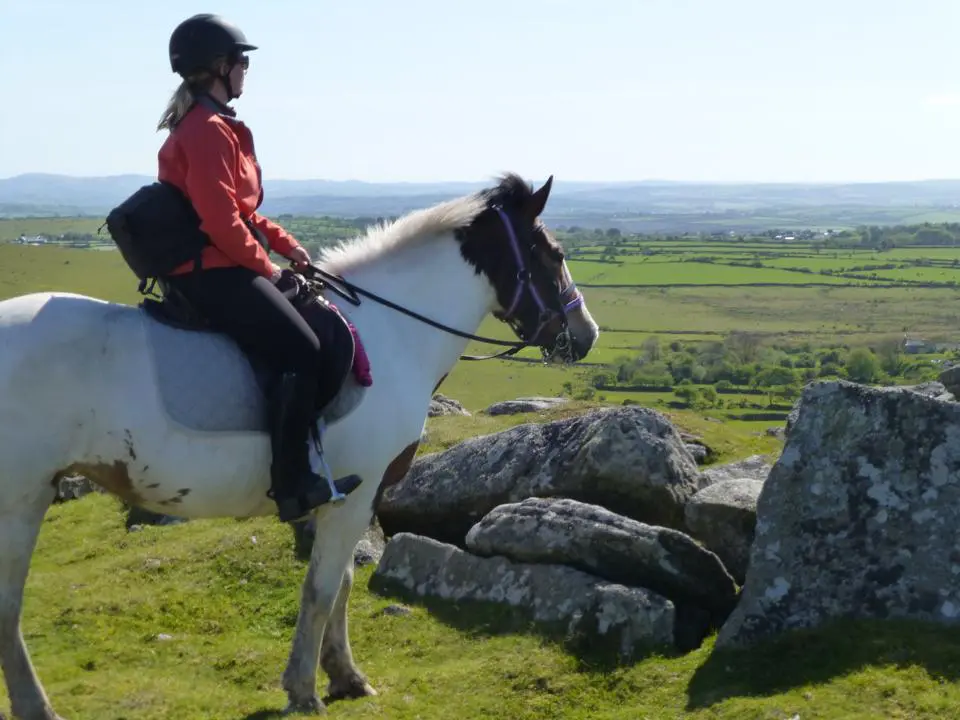
Bodmin Moor is a wilderness on a relatively small scale, spanning about 10 miles across with a strong human imprint, scattered with ancient remains of Neolithic settlements, hut circles, burial chambers and in its more recent history it was the domain of smugglers and pirates. It is the perfect destination to experience horseback riding in England. We rode by rocky outcrops such as Alex Tor from where we could take in the breathtaking moorland views reaching as far as the North Cornwall Coast. We climbed the summit of Rough Tor and rode by the highest point in Cornwall at 1375 feet – Brown Willy – which means Swallow’s hill.

During the week’s riding we were enchanted by the stories that Jen, our guide, told us about the moor and its long-standing history. We enjoyed lovely canters and gallops as we explored the different areas, rode along quiet country lanes and even onto an old airfield that played an important role during Second Wold War when it was home to American and Canadian troops.

Freckles taking a break at Blisland Commons

Freckles taking a break at Blisland Commons

My mount for the week was a forward moorland pony named Freckles who was extremely surefooted, responsive and fun to ride. She is a mighty little mare of 13’2 hands who I came to love during the week. The riding stable has a small variety of horses to choose from, including a big Shire, and ensures that each individual in our group was satisfied with their mounts.

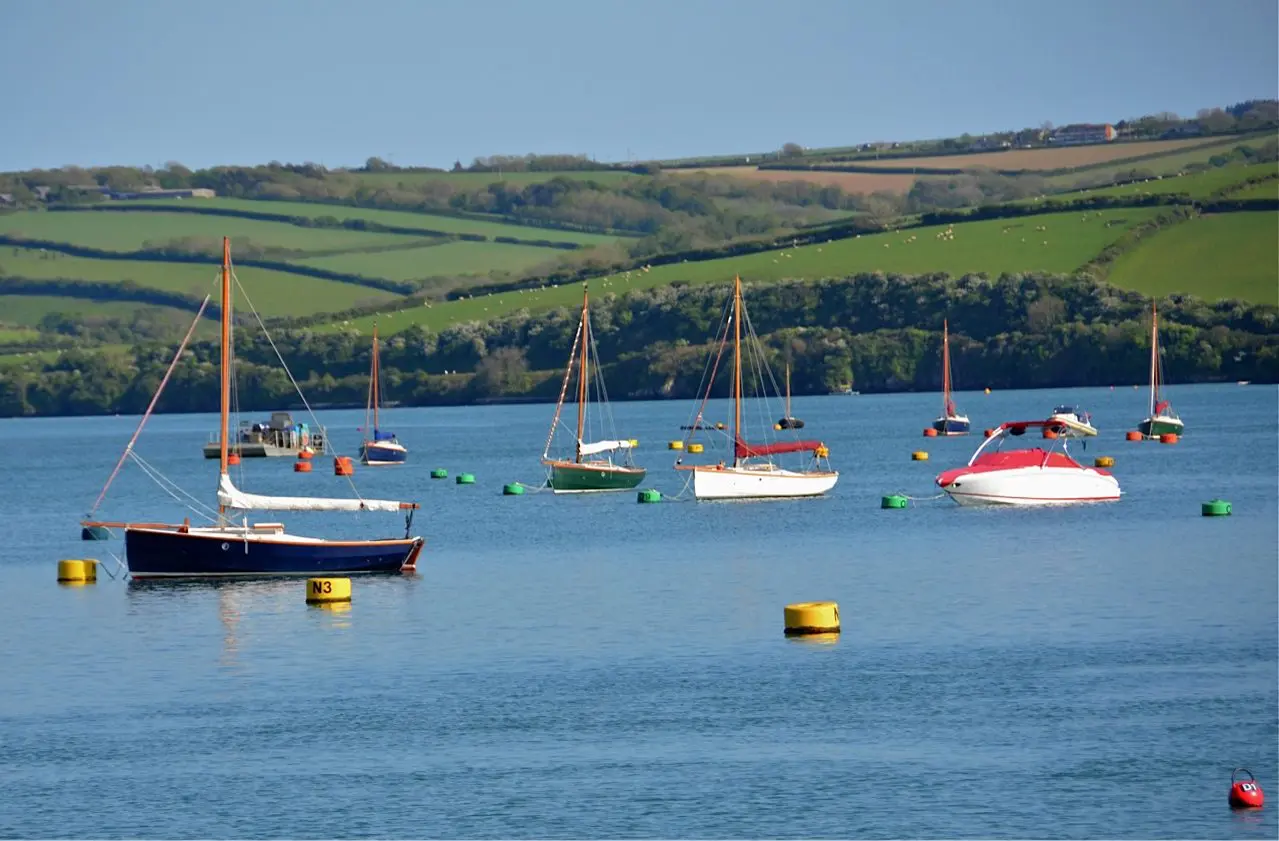
Dinners during the week were at different local pubs, each of them with wonderful items to choose from and I can honestly say I enjoyed each and every meal we had. We dined near the stable at the Jamaica Inn, St Tudy Inn and also went further afield to St Breward Inn and Port William Pub at Trebarwith Strand near Tintagel. To ensure a well-rounded itinerary we had the opportunity to explore King Arthur’s castle at Tintagel and visited the local fishing village of Padstow, a quaint tourist place well worth a visit.

Overlooking the bay at Padstow

Overlooking the bay at Padstow

The week flew by with riding and sightseeing, and too soon it was time to say good-bye and our trusted taxi driver took us back to the Bodmin Parkway train station in time for our departing train back to London. Paul and Jen at the stable are now working on incorporating longer trails into an itinerary that may even turn to be partially progressive in addition to the stationary itinerary we now offer. I can’t wait to return to ride Freckles and explore the new longer trails on my trusted steed.

The author, Biggi Hayes, aboard Freckles

The author, Biggi Hayes, aboard Freckles

Following Mel and Bayard Fox’s ride in Morocco in March, they put together the following photo slideshow. Enjoy!

Please enjoy the below photo slideshow created by Mel Fox following her Glacier Estancia ride in Chile.

Bayard Fox, founder of Equitours and Bitterroot Ranch, was featured in Hurlingham Polo

From my ranch in Wyoming I can see a range of mountains, towering more than 13,000 feet into the sky. No other human dwelling in sight. I live in a remote valley next to the cast Yellowstone Ecosystem…

Read the full story here: Feature on Bayard Fox in Hurlingham Polo

Horseback Riding History Has Multiple Aspects

There are countless facets to the complex relationship between men and horses which has been so crucial to both species. We summarize some of the most important below with links to more detailed discussions of the particular subject elsewhere on our websites. How can we know who we are or find a wise direction for the future without knowledge of what formed us? Horses originated in America and many millennia ago some made the journey across the Bering Straits to Asia and Europe where they thrived. Men began to hunt them and found them an excellent food source which they still are today in many countries. The cave drawings dating back over 20,000 years in places like Alta Mira  attest to this though probably they were not used for riding until much later when the horsemen of the Steppes discovered their revolutionary advantages for this purpose.

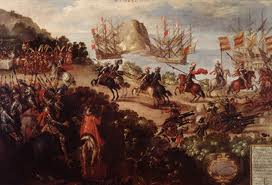
An outstanding example of how the use of horses could revolutionize a society is the sudden acquisition of the horse by the Plains Indians after the Santa Fe Rebellion of 1680. It is ironic to consider that Native Americans are now thought to have hunted horses in North America to extinction about 10,000 years ago. It is fascinating to speculate what course world history might have taken if Native Americans had discovered the real potential of horses and they had not crossed the Bering Straits. Without the horse to help free us from the struggle to feed ourselves by doing the heavy farm work like plowing and harvesting, we would have had much less time to devote to art and science. European and Asian societies could never have developed as fast as they did and the ultimate clash of continents might have had an entirely different result.

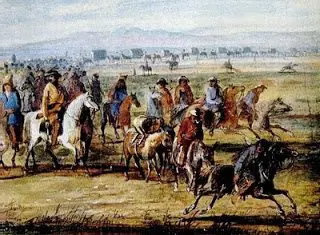
Mounted Indians closely pursuing a buffalo herd on horseback.

Travel on horseback made possible the cohesion of great empires like Persia which stretched from Turkey and Egypt to the borders of India until its destruction by Alexander the Great. The Persian mounted couriers routinely made the 2,000 mile journey from Sardis to Susa in 7 days and their messenger system had many offshoots to the farthest corners of their empire.

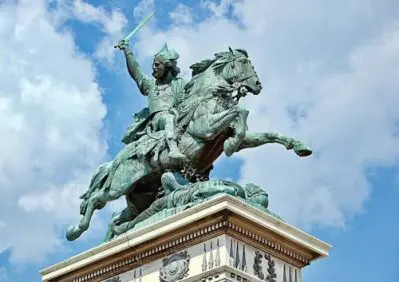
Cavalry were very often a determining factor in winning the strategic battles which changed the course of history. The incredibly swift spread of Islam and Arab domination across large parts of Europe, Africa and Asia was made possible by mounted horsemen riding superb Arabians. Their advance was only barely turned back by the heavy cavalry of the Franks at the battle of Poitiers in central France where the then recent innovation of the stirrup may have played a deciding role. That battle and those that followed drove the Moslems out of France and may be the reason why most of us go to church now instead of the mosque. It was the intervention of the Polish Cavalry under Sobieski which saved Vienna during the siege of 1683 at the last moment and deprived the Turks of a strategic foothold deep in central Europe.

Horses have helped mankind in other ways besides warfare, travel and transport. They have enormously facilitated hunting in many parts of the world as in the case of the Plains Indians and the buffalo. Another very useful task for which horses are exceptionally well adapted and which they often enjoy is working livestock. They are almost indispensable for cattle drives even today. While it cannot be termed riding, horses revolutionized agriculture by plowing the fields, harvesting the crops etc. making it possible for one man to do the work of ten.

Did you ever stop to think how many expressions we still use related to horses in our everyday speech? We hear things like “champing at the bit”, “dark horse”, “Trojan horse”, “eats like a horse” or “horse sense” and dozens of others very frequently.

Many equine sports practiced today derive from necessary tasks performed by riders. A prime example is dressage which originated by performing battle maneuvers like the capriole which must have been devastating to surrounding foot soldiers. Rodeos, fox hunting, reining, team penning, tent pegging, bullfighting, buzkashi, jumping and polo are a few. The outstanding example is horse racing, “the sport of kings”, watched by millions where the big money is today.

The often tragic history of the wild mustangs which are descendants of the horses escaped from the Spaniards is another interesting chapter. In the late 17th and 18th centuries some of these fine horses coming from the best Spanish blood lines escaped to the wild and multiplied on the Great Plains until they numbered several million. Predators could rarely kill them because they were fast, had keen hearing, an excellent sense of smell and a very powerful kick as well as strong jaws. According to J. Frank Dobie in his wonderful book, “Mustangs” and others who should know, some of these horses even sought out predators like mountain lions and wolves to kill them. There are also feral horses in Australia known as brumbies and made famous in that wonderful Banjo Patterson poem “The man from Snowy River,” also made into a movie.

Individual states like Wyoming, Arizona, Utah and Texas have their own unique histories. Each of these states and many others as well owed their settlement and early development to horseback riding. The cattle ranches, which were long vitally important to their economy, would not have been possible without the use of horses and the wild mustangs provided an abundant supply of mounts. At the same time the superb cavalry of tribes like the Comanche and the Sioux considerably delayed white settlement.

While horses are no longer indispensable to the daily lives of most of us as they were 100 years ago, they remain very popular in our society as a sport and a diversion. There is no denying the tremendous aesthetic appeal of these magnificent equine athletes in motion which have captivated mankind for millennia. Many of us find them responsive pets who form a close bond with their riders and share our pleasure in a fast canter or an interesting trail ride. Cow horses seem to enjoy working cattle as much as we do if not more. We are also rediscovering the great pleasure of traveling on horseback simply for pleasure and education. There are abundant and varied possibilities.

Other related articles:

Adventure Travel on Horseback

Advantages of Solo Travel on Horseback

Sampling Lusitano horseback riding

My week in experiencing riding vacations in Portugal was split between our host south of Lisbon and the other farther north. It began at the international airport in Lisbon as our group all found each other at the meeting point based on examining one another’s riding shoes or jackets, or perhaps recognizing the general air of a person who rides horses. It was an eclectic group, with participants from Belgium, Norway, England, Germany and Denmark. English was the common language of all and we were all happy to talk about our horses at home or other trips we had taken before. The guide, Miguel, met us and greeted those guests who were returning (some for the 8th time!) with great enthusiasm, and quickly learned all our names and gave us a useful packet with a map of our route, schedule, and contact information. The three accommodations used by the Dolphin Trail, our itinerary, form a triangle, and the riding is from one to the other, with a day of riding in each area, so that you are moving basically every two nights. The Alentejo Coast uses some of the same accommodations, and the route is linear, from either north to south or south to north depending on the date.

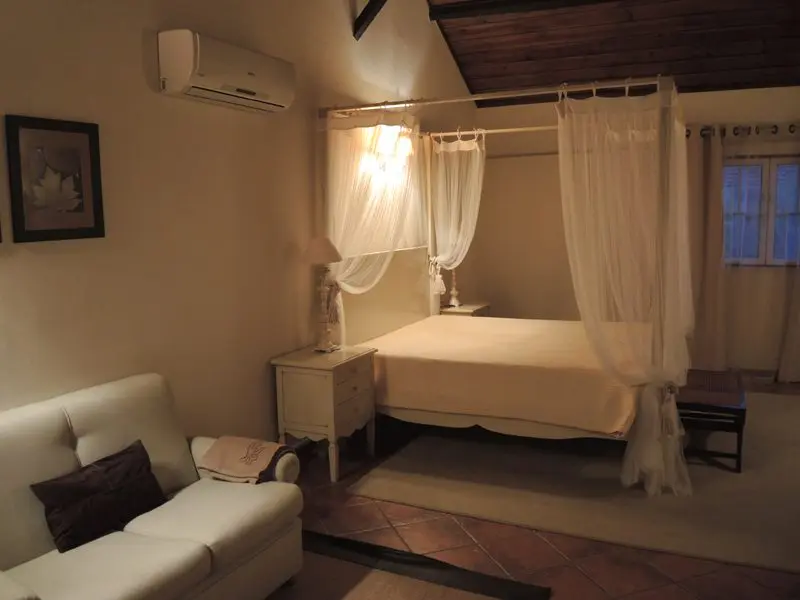
My lovely room

My lovely room

It took about an hour and half to drive from the airport to our first destination, which was immediately welcoming with its comfort and luxury. The accommodations throughout were wonderful in that they made guests feel at home but also pampered.

Dinner was served each night at our hotel, although later in the week a there was also a dinner at a local restaurant, and a generous breakfast buffet greeted us each morning. During our first dinner Miguel ate with us and asked us all about our riding experience and type of horse we liked, storing that information away to help with the horse designation the next morning.

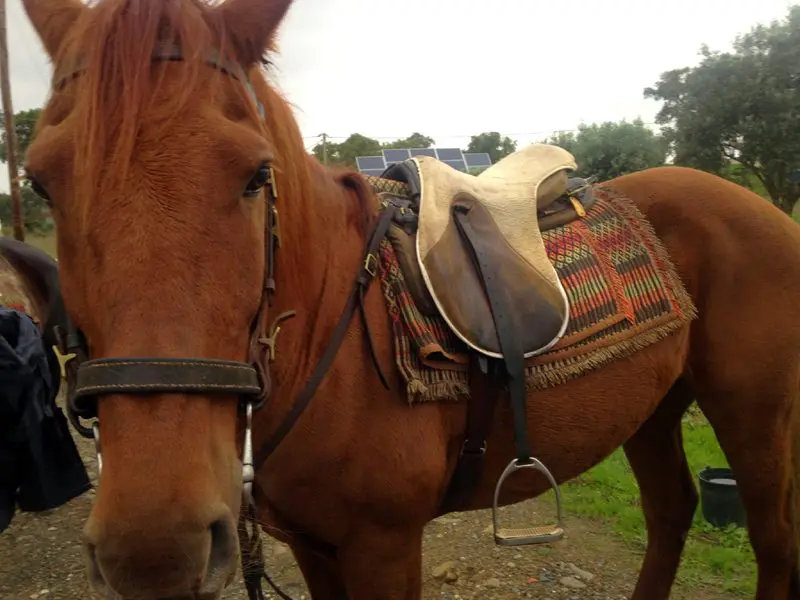
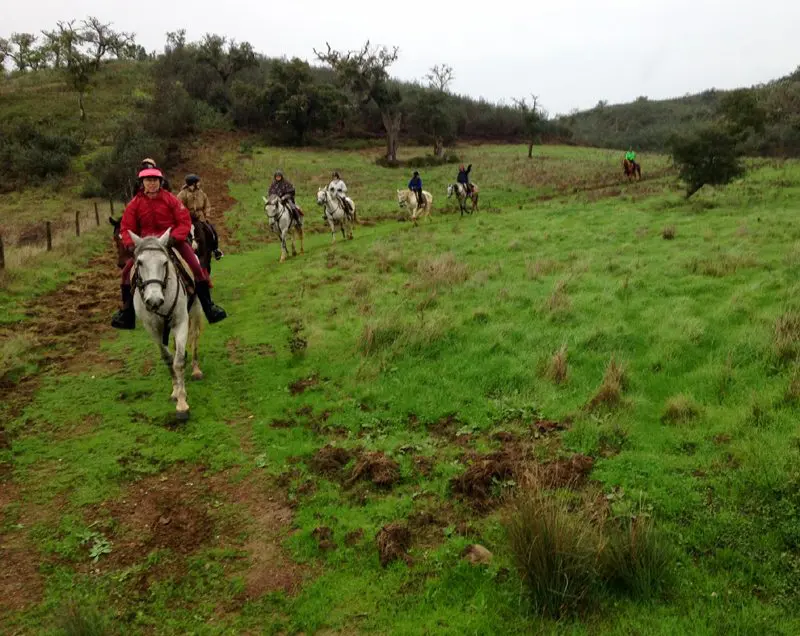
Most horses are Lusitano crosses, with some pure Lusitanos as well. I had a beautiful chestnut horse aptly named “Santo,” as he was perfect for me each day that I rode him. What was lovely about riding him was that he was happy to go at a gentle lope near the end of line, and also happy to stay up front and lead the pack during our long canters. There were horses to suit all riders, including a woman who had never ridden outside of the arena before who rode a gentle older horse who knew the ropes well and followed the group faithfully. It was a fully booked group of 12 riders, and the horses behaved admirably as a whole. The saddles used were all McClellan, with comfortable layers of foam and sheepskin, and the bridles were a French style snaffle. At some points of the trip we would ride briefly along paved roads through town, and Miguel would ask us to ride in pairs along the side of the road and stay together as a group and both horses and cars behaved well!

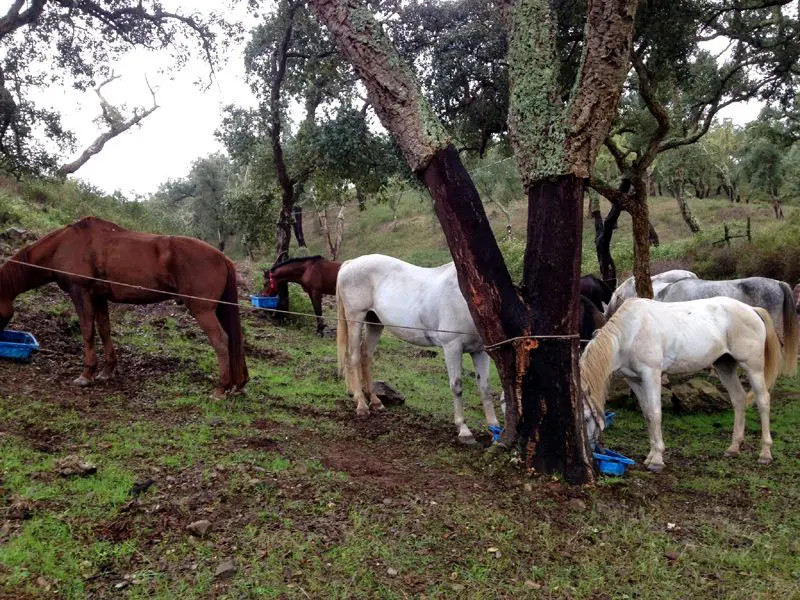
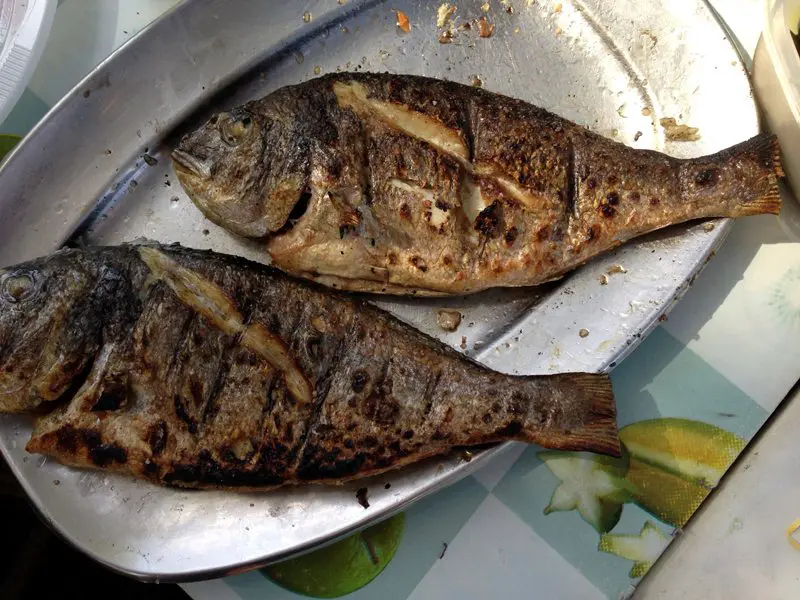
After a morning of riding through cork or eucalyptus forests we would reach our picnic destination, where the backup guide had prepared a table and chairs for us, and a line to which to tie the horses. Each guest untacked her horse and then we all fed them grain in a single synchronized movement. We would enjoy salad and homemade bread with red wine until the day’s meat or fish was finished grilling and then add it to our plates. I unfortunately do not eat sea food and so missed out on the spectacular fish one day that others claimed was the best they’d ever eaten.

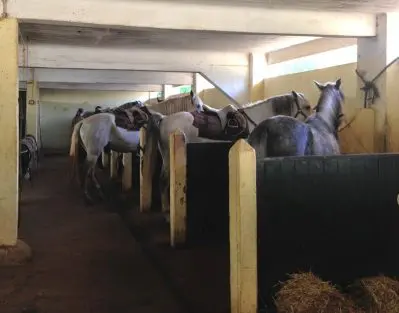
The horses at home

After a leisurely lunch we would groom and tack our horses and be off for the afternoon ride to our night’s accommodations. The horses either stayed on the grounds, or at their home stables a short distance away. Here there are rows of Lusitanos in narrow stalls, often eager for their meals while we were there, but usually spending their days in the open fields nearby.

Although it had been rainy our first few days, it did not dampen anyone’s enjoyment or enthusiasm. The weather cleared to enjoy riding under bright blue skies and for the rest of the group to continue on with the dolphin excursion and the beach. I parted ways and headed back to Lisbon and to my next destination.

Based out of Azambuja, about forty-five minutes north of Lisbon, is the stud farm that serves as the starting point for the Traditions and Culture itineraries. Although there were no trips scheduled for the time I was visiting, I got to see many of the trips’ destinations and spend some time at the farm.

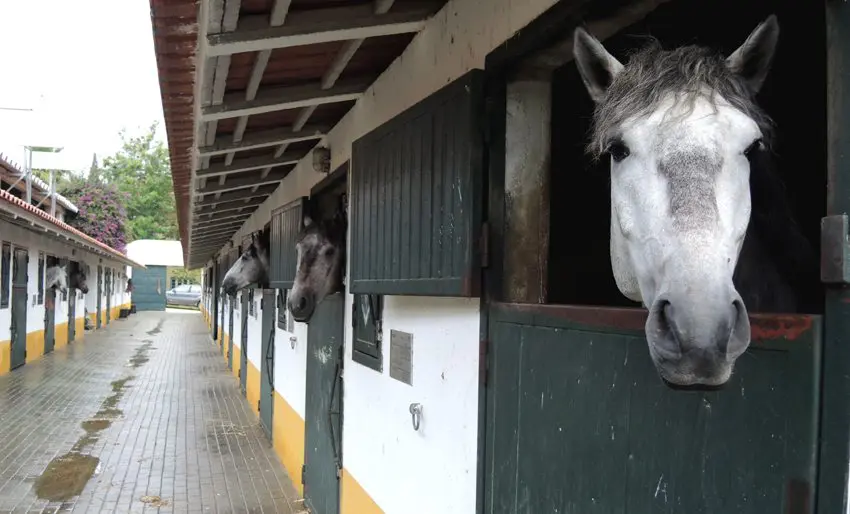
Lusitano faces

The purebred Lusitanos are bred and trained for competitive dressage and I enjoyed wandering down the stall aisles visiting the beautiful stallions and watching the trainers at their impressive work. I even got to ride one of these stallions as I sampled a dressage lesson. The horses used for the treks are all pure Lusitano mares, most bred at the farm with basic dressage skills. I rode a lovely mare called “Divulgadora” who was very easy to ride and responsive to the aids. On the trail I was  especially impressed with the tack, which was all of excellent quality. I had never seen the type of saddle I rode in, in a dressage style, but with a wonderful padded seat designed for the trail which was very comfortable. Divulgadora confidently carried me through the vineyard and forest that surrounds the farm, with beautiful views of the countryside. Edgar, my guide, greeted a man in the vineyard, explaining to me that it was his cousin; Edgar had grown up there and had ridden through the land since he was young. These sorts of authentic connections to the local culture are often purposeful and unique part of these trips.

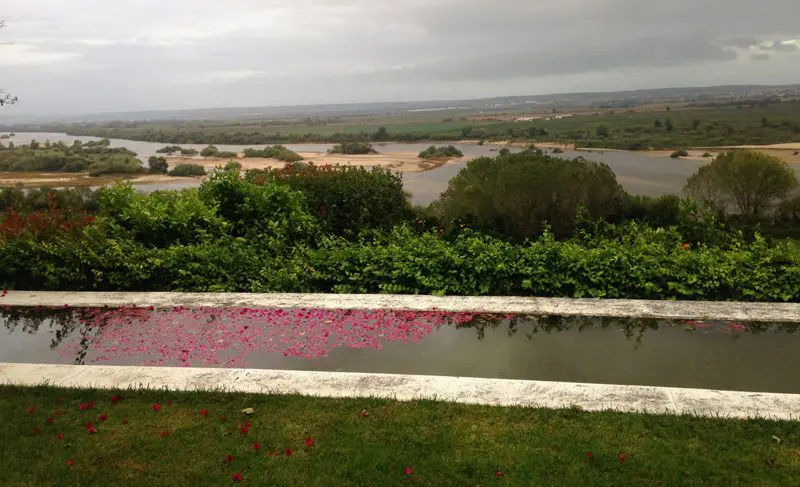
Although it was still a bit cloudy one day of touring, my host, Tiago, said that the next destination would be impressive. “I know it’s dangerous to guarantee anything 100%,” he said, “but I am that confident in this spot. You will be wow’ed.” With an introduction like that, I couldn’t wait to see where we were headed! The spot was Quinta da Boavista, one of the many quintas the itineraries travel to for lunch, dinner, or overnight. The name was perfectly suited, as the view over the Tagus River was spectacular. “Wow,” I murmured, totally proving Tiago’s assumptions correct. This was a place that would completely be enjoyed by riders on the Traditions and Culture itinerary as they stopped for lunch. The owner of this estate also is carriage driver, and at the end of the meal often drove with the riders as they left, offering a tutorial to those who were interested.

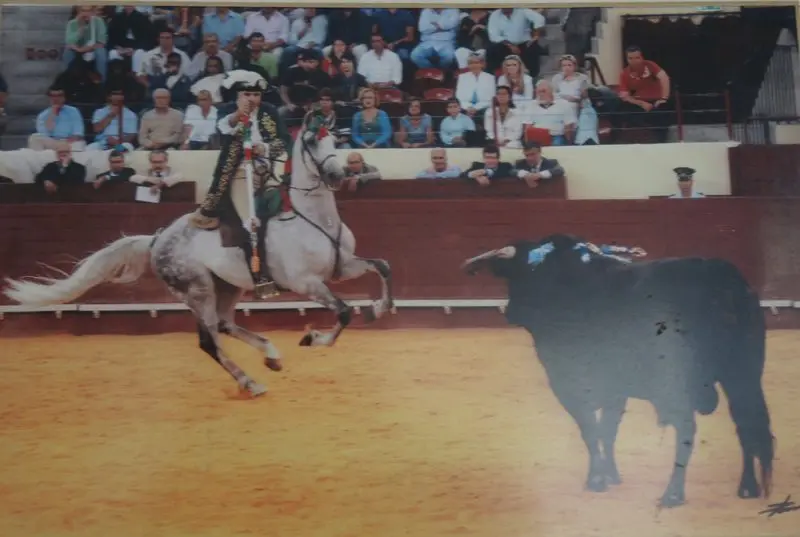
This is the strength of these itineraries, the connection to the local estates and culture that it offers. Tiago has developed the itineraries keeping in mind the clear goal of eliciting the “wow” response at least once per day, be it by the beauty of the surrounding nature or the interest of a local cultural spot. Another highlight was a nearby restaurant in the town of Santarém. Called “O Forcada,” the décor is dedicated to bullfighting (a “forcado” is a group of eight men who challenge the bull directly with no weapon or defense). While Quinta da Boavista had made me feel like I was part of the nobility, O Forcada made me feel like a part of a local family. The host greeted us warmly and the restaurant’s history and authentic commitment to and love of the traditional bullfighting culture was evident. (As a note, the Portuguese style of bullfighting differs from the Spanish style in that the bull is not killed. As a former spectator of bullfighting in Madrid, I appreciate the distinction!)

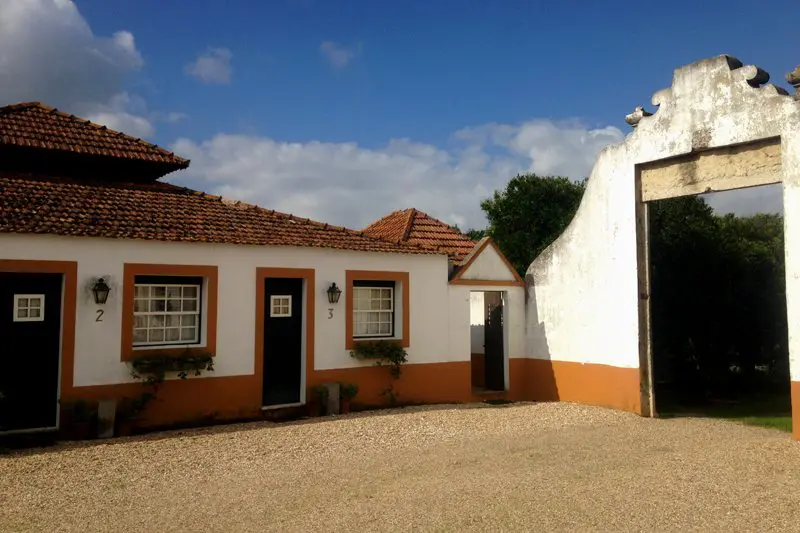
The accommodations at the quintas, like at the restaurant O Forcada, all offer wonderful hospitality as the hosts seem genuinely pleased to open their homes to you. As they are authentic farm houses, the amenities are not all necessarily luxurious, but comfortable and perfectly adequate. Another special location was the Quinta da Lapa, which is an operating vineyard with lovely rooms and views. Close to the nature reserve of Torre Bela, riders on the Secrets of Ribatejo itinerary will stay here to ride through this area protected for deer, fox, boar and birds.

My week in Portugal was able to offer a wonderful introduction to the riding here, both along the coast’s southern sandy tracks and through the northern quinta farmland. The commitment of both hosts to provide a high quality experience and their fine Lusitano horses add to my confidence that this is a promising destination that will many riders will enjoy.

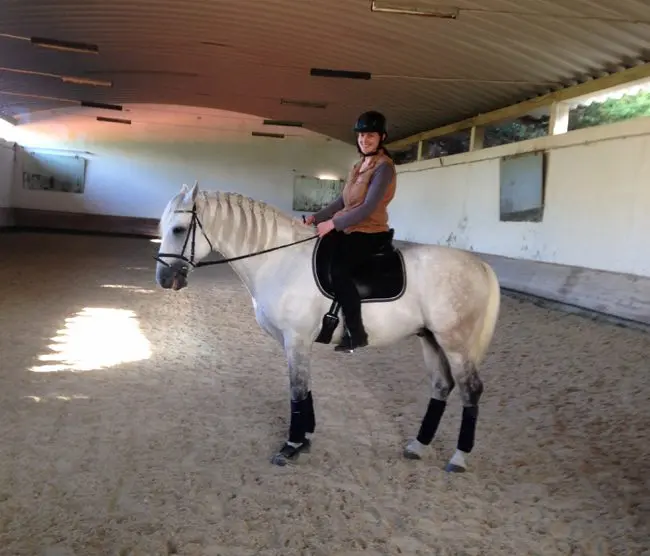
The author on a Portuguese Lusitano (and the most highly trained dressage horse she will ever sit on!)

The author, Megan Barrett, on a Portuguese Lusitano (and the most highly trained dressage horse she will ever have the privilege to sit on!)

Riding and Exploring during this unique riding vacation in Italy

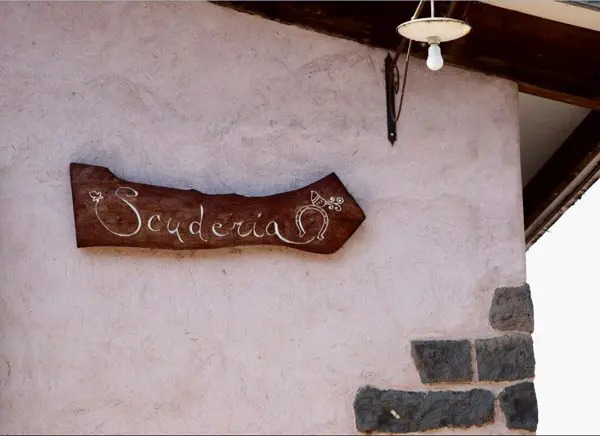
"Stable" sign: welcome to Italy!

“Stable” sign: welcome to Italy!

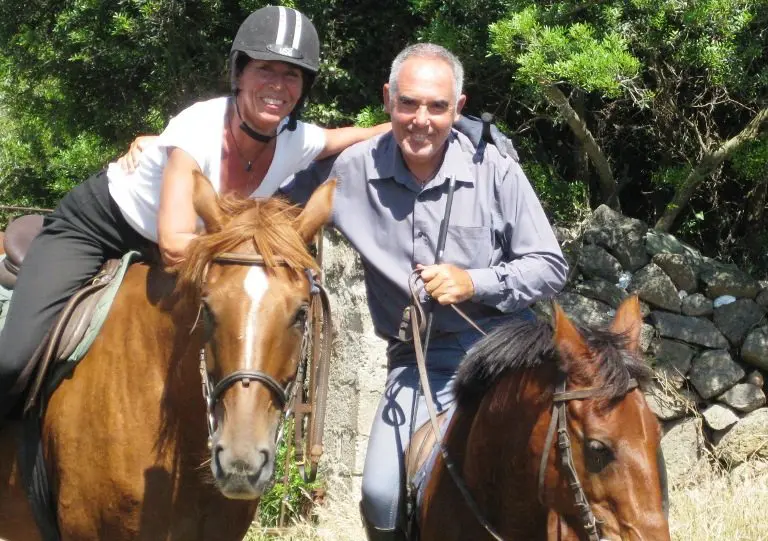
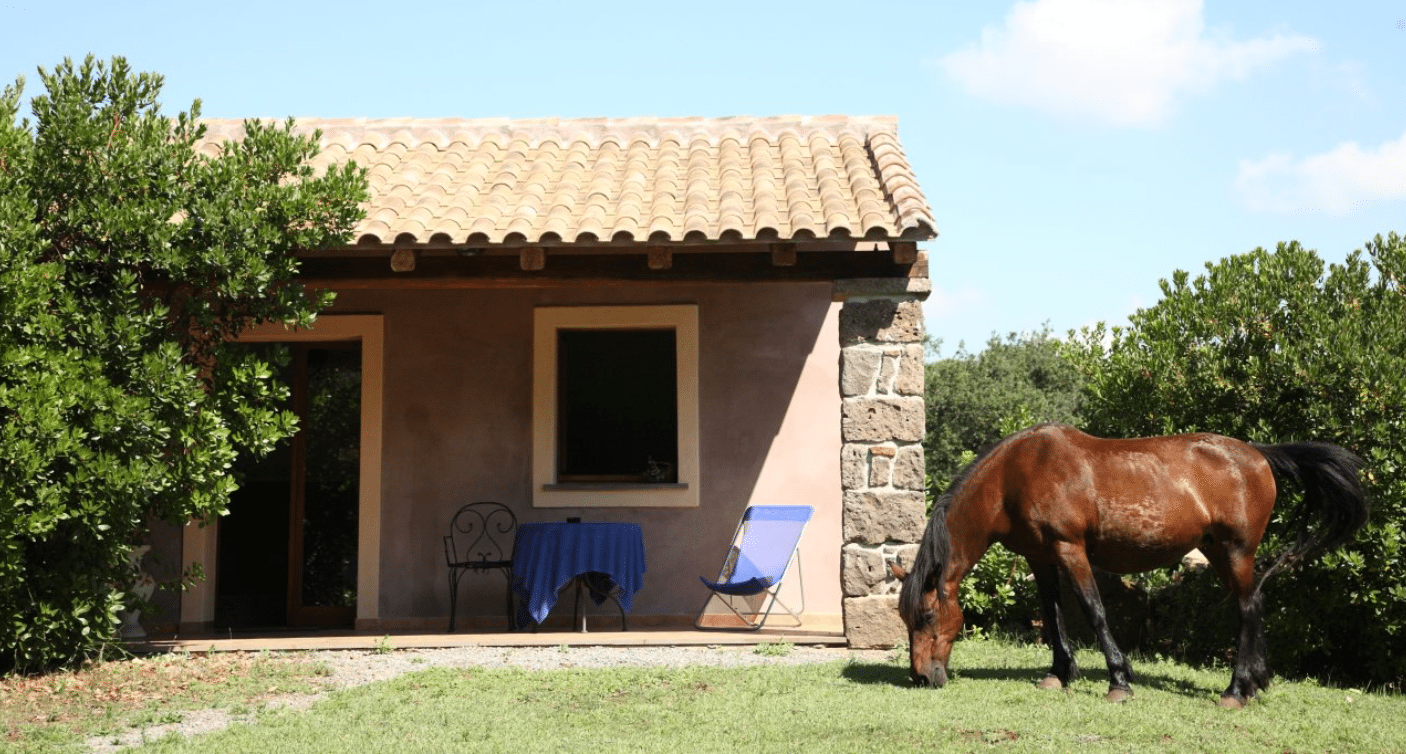
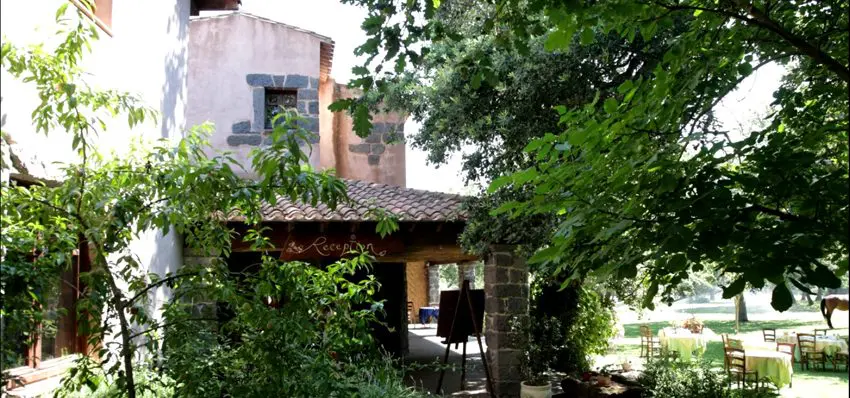
I was struck by the charm of the inn the moment I stepped from the car near Abbessanta, Sardinia. Granted, my lack of Italian might have made it easier for the “Scuderia” sign at the stable to impress me with its exotic nature, but there was an authentic feeling of this place’s heritage. This was combined immediately with comfort and hospitality as I was greeted by the manager, Betty, and promptly offered a welcome drink. After dropping off my bags in my garden bungalow I opted to join dinner that was just about to start, rather than to take up the offer to settle into my room, as I knew jet lag was lapping at the edges of my consciousness. Although Sardinia had not been particularly difficult to reach, being only a short plane ride from the main Fiumincino airport in Rome, it had been my fourth plane coming from Equitours’ headquarters in the very remote Dubois, WY, so I knew exhaustion was likely to claim me if I paused too long.

Luckily, the food and company at dinner were restorative, and although I had lost track of all the meals I had eaten that long day, I fully enjoyed each bite of the generous four courses, including melon and prosciutto, minestrone, sausage, and red wine from the property’s own grapes. Betty, a perceptive woman who seems to be able to foresee guests’ needs and desires before they do themselves, is Dutch, and fluent not only in English and Italian, but also many other languages, allowing her to communicate well with all guests for this riding vacation in Italy, as they originate predominantly from Germany, Switzerland, Holland and England. She served as translator as Daniele, the owner, discussed with me the riding programs that they offer, and his family’s long history on the property. The horses came before the hotel, and the horses were part of the farm’s existence from the beginning, about five generations earlier. Eventually they became its focus when the family began concentrating its efforts on breeding, training and competing Anglo-Arabians. The owner himself was a serious jumping competitor, and has recently turned his focus to endurance racing, for which his horses are particularly well-adapted.

Owner Daniele (R) and guide Illa (L)

Owner Daniele (R) and guide Illa (L)

These horses used for competition are also used for the guest rides, and so have very good condition and training. He told me how he developed all of the trails from the stables, finding the best route to offer to guests, and has since turned over leading the majority of the rides to a few long-term guides. As I was arriving before the Monti & Mare itinerary was set to begin, we made a plan for my upcoming days, including a lesson and a trail ride around the property.

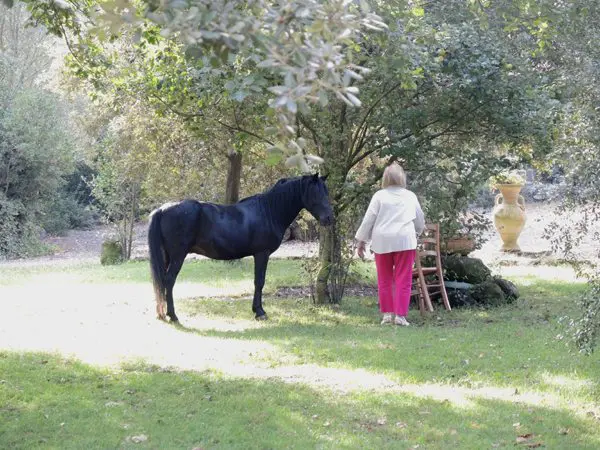
I slept well in my peaceful and comfortable room, and awoke to the sound of hooves as a rider cooled out her horse after an early morning lesson. I selected my breakfast from the full buffet, including the typical European fare of meats and cheeses and also offering eggs made to order. In the lovely weather of early October, other guests were scattered at tables on the terraces and lawn. I had already heard a lot about the wild Sardinian horse that had been adopted and domesticated, and saw a full performance of his charm while enjoying breakfast. All horses graze on the lawn and grounds during the day, and when he was released he went directly to the lawn’s apple tree and stomped the ground impatiently, tossing his head and throwing his pretty black mane in to the air. He has worked out this routine, because he knows that if he insists Betty will climb a chair and shake down apples for his own personal enjoyment. The wild Sardinian horse is small but strong, and its band is the largest in Europe. While certainly enjoying the comfortable life here, this horse was not typically used for guests, but only for a few talented young riders.

The Wild Sardinian horse awaiting his apples

The Wild Sardinian horse awaiting his apples

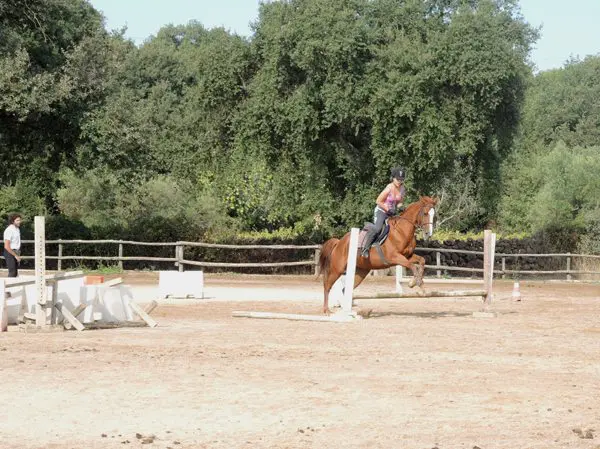
And riders there are! With two instructors the arena was doing brisk business, mostly beginner riders who were well-taken care of, and a few jumping lessons.

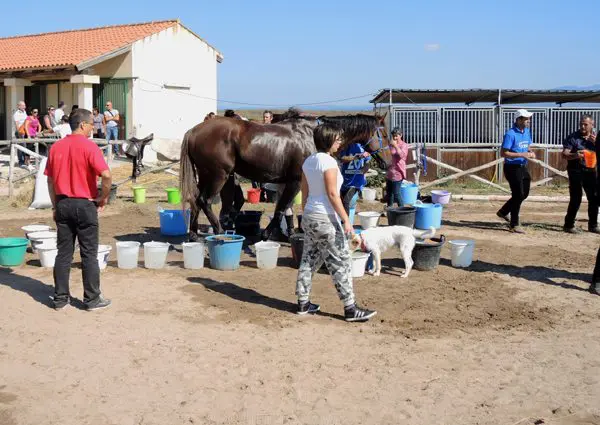
Stable staff or riders were often seen crossing the lawn, bucket of grain and halter in hand to catch the next mount. That morning I helped catch and tack my horse, an Anglo-Arabian called Nepita, who couldn’t be bothered to put too much effort into the arena riding, but was willing to go on the trail! Our afternoon trail ride started benignly enough, but the weather soon turned inclement, and we were treated to a two hour ride in a down pouring rain and thunder. “This never happens!” Illa, my guide, told me. “It hasn’t rained in two months!” It was apparently just my lucky day. The ride was still enjoyable, despite the weather’s best attempts to dampen our enthusiasm, as we made our way down ancient shepherds’ paths and past their pastures of sheep. The narrow dirt track provided the perfect opportunity for a long, fast canter, and the rain and puddles added to the drama and fun of it all. Illa told me that I was smiling ear to ear while following her at a brisk canter, and I don’t doubt at all that my enjoyment was that obvious.

When it wasn’t raining and I wasn’t riding, I had time to enjoy the sunshine beside the pool or outside my room. Numerous comfortable chairs are well positioned to enjoy both sun and shade, and the pool is pretty and inviting. I paused in my reading to watch a few horses wandering around the pool area, serenely eating and shaking away the flies.

The next day was the start of the Monti & Mare itinerary, and I met the other participants, two women from the Netherlands who compete in dressage at home, and a couple from England who had been to the inn many times before. They had actually done this itinerary earlier the same year, and so we were doing it backwards to provide some variety for them, and starting at the coast rather than at the main stables. Before riding, we stopped by an endurance competition that was taking place near the paddocks on the coast, and in which Daniele and a few of his horses were participating. Daniele was riding a young horse to get him qualified for the shorter distances, and a young rider was racing one of the most experienced horses, and a popular guest horse, so that the rider could become qualified. Daniele’s Anglo-Arabians were in good company of other fit Arabian horses, and we watched with interest the process of cooling, watering, and vet checking the horses as they came into the check point. Daniele and his horses all competed admirably, and then it was our turn to be the jockeys.

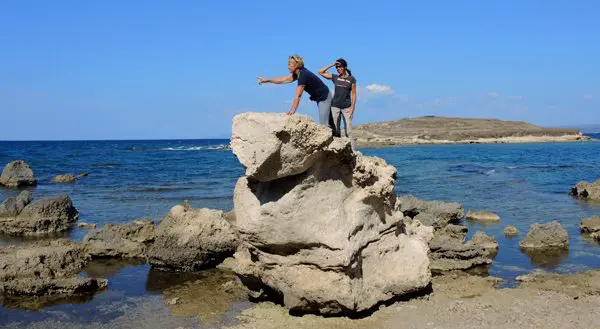
First though, we had to eat. This is Italy after all. We drove to the coast line and Illa led us to a hidden stony beach where she spread out a lavish picnic of bread, meat, cheese, tomatoes from the garden, and white wine. The beach was beautiful and we enjoyed a leisurely meal while contemplating the vast blue-green of the ocean before us.

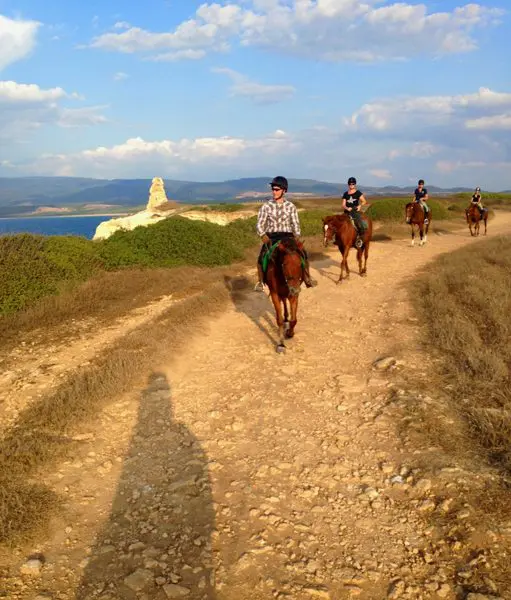
Then we packed up and headed out to the paddocks, where we Illa pointed out our mounts to catch, groom, and tack. I used Daniele’s new saddle that he had just raced in, but the other tack was well-worn. The island lifestyle often calls for the inhabitants to use what is available to them, and all fitted the horses well and safely. After Illa had made sure we were all tacked and mounted appropriately, we headed out for a few hours’ ride. We followed the sandy tracks with the tall bamboo on either side, went through fields and past brackish lagoons, before coming upon the beach itself. The coastline reminded me of Ireland with its cliffs and crags, as well as the pastures of sheep beside. We passed a Spanish tower built in the 1500s when the island was under the control of that country to ward off Moorish attacks, and enjoyed fast canters. My horse seemed rather put out to not be in the lead, and keen to go for as long as the day’s trek called for, but the other horses seemed to content at an easy canter behind us. Our path took us on the sandy beach only briefly, and the horses were happy to walk in the waves’ surf. The other participants teasingly reminded me that I would be missing the next day, when they would spend more time on the beach and canter along the shoreline – I would just have to come back!

By the time we returned to the paddocks twilight was falling and the mosquitoes were emerging. The returning guests sagely extracted bug repellent wipes from their packs as we quickly took care of the horses and returned them to their grassy paddocks. We got back to the inn just in time for dinner, after a satisfying day.

I was sorry to leave before dawn the next morning, but was sent off with the same hospitality with which I was welcomed; with a car organized for me and Betty seeing me off with two sandwiches to sustain me through my flights. My glimpse into Sardinia was brief, and enough to leave me impressed with the island’s diversity of landscapes and its unique and fascinating history and culture – full of surprises like the wild horses and the Stone Age nuraghi towers. The fun riding and hospitable hosts made this Sardinian sampling particularly memorable.

By Megan Barrett, seen here upon her speedy Sardinian Steed

Not for the faint of heart

Icelandic legend spins the tragic, true tale of falsely accused folk hero Fjalla-Eyvindur and his wife Halla. Exiled in the inhospitable highlands with little food and no shelter, their children died in infancy except for one beloved but weak two-year old daughter.

Their hideout discovered, and the need to run upon them, they made a decision. Halla cradled her daughter in her arms and sang her to sleep with the lullaby “Sofðu unga ástin mín” (“Sleep my young darling”) before dropping the slumbering child over a waterfall to a quick and certain death so she and her husband could flee unhindered.

Iceland on horseback

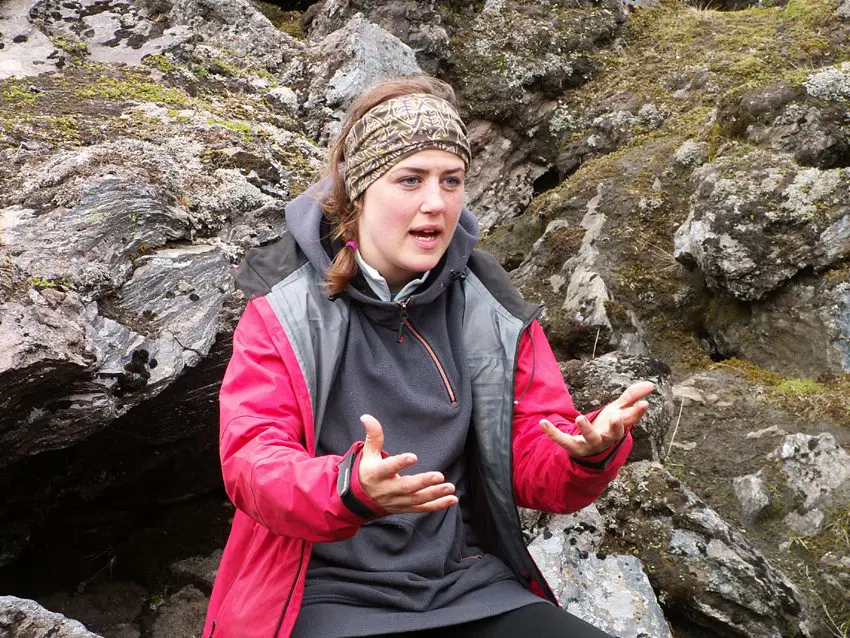
Anita kept us entertained with Icelandic legends as well as informing us about her country’s unique geology.

Our guides Anita and Elva, both young mothers themselves, solemnly sang this lullaby in their heart-wrenchingly clear voices to our group of riders as we rested by a stream in the highlands where the ghost of Fjalla-Eyvindur is rumored to wander. Beside me, the young Danish wrangler Nina fought unsuccessfully to hold back the black tears streaming down her dust-covered face.

“Did you understand all the words?” I whispered once the song had ended. “No,” she choked in reply. ”The music is just so full of sadness.”

Iceland on horseback 2

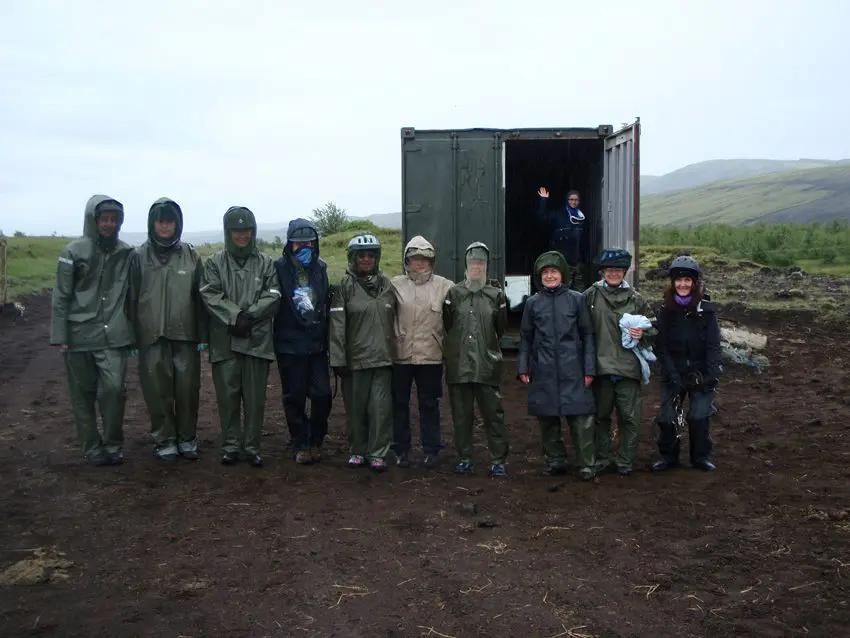
The weather was ever changing. This is our group modeling Icelandic rain gear on the wettest and coldest day.

We were an all-women’s group for the first ride of the Icelandic summer; 16 intrepid riders from America, Australia, Austria, Denmark, Iceland and Switzerland on this dark and blustery June day in the forlorn highlands north and west of the slumbering volcano Hekla. The melancholy tune touched all of us; daughters, wives, mothers, grandmothers… our ages spanning the decades of twenties through sixties, all here to experience riding the iconic Icelandic horses in their ancestral volcanic island home.

Iceland on horseback 3

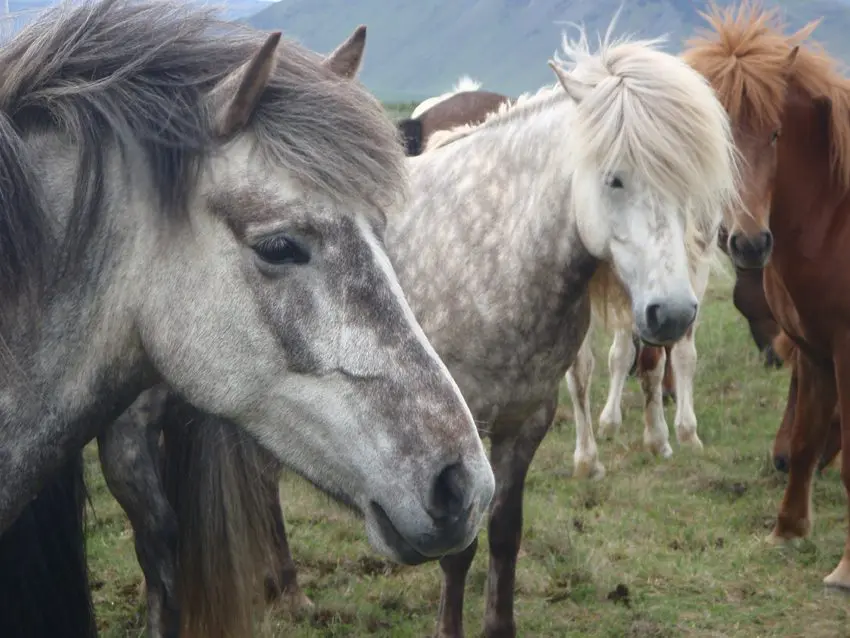
Icelandic horses come in all colors; white, sorrel, bay, black, palomino, dappled gray, and paint.

Iceland has a population of around 315,000 inhabitants who own over 100,000 of this uniquely pure-bred stock. Brought in longboats to the country by the Vikings from Norway and the British Isles late in the 9th century, they are considered one of the oldest breeds of domestic horses in existence today. Bred more for their temperament and personalities than for color, these friendly, stocky steeds are treated as part of the families they live with. Having evolved in such a harsh environment, they are amazingly surefooted and confident, practically floating over the landscape in their smooth tölt gait. To interact with them is amazing, but to ride them is nothing short of magical.

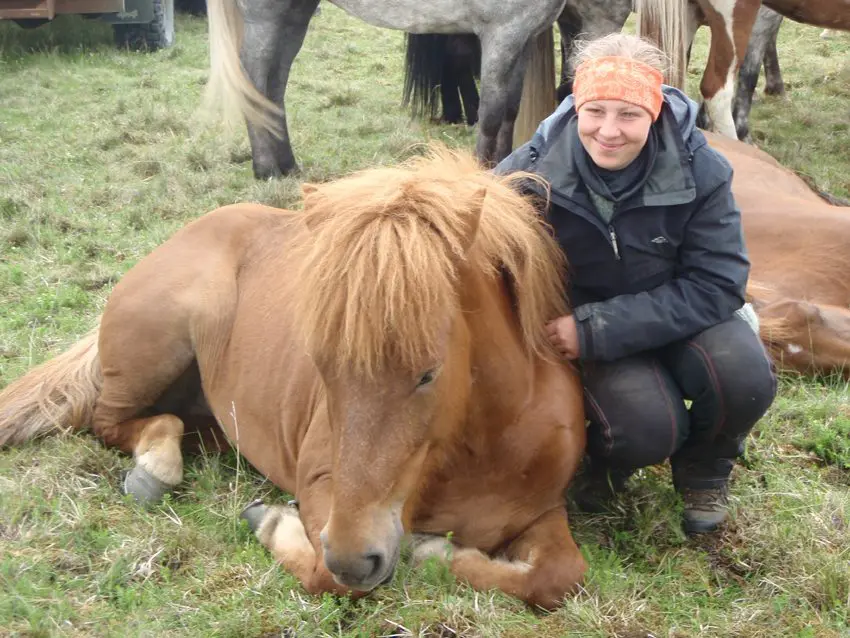
Our Danish Wrangler Nina comforting one of the younger horses who was tired on his first big excursion with the herd and riders.

Our Danish Wrangler Nina comforting one of the younger horses who was tired on his first big excursion with the herd and riders.

Iceland on horseback 4

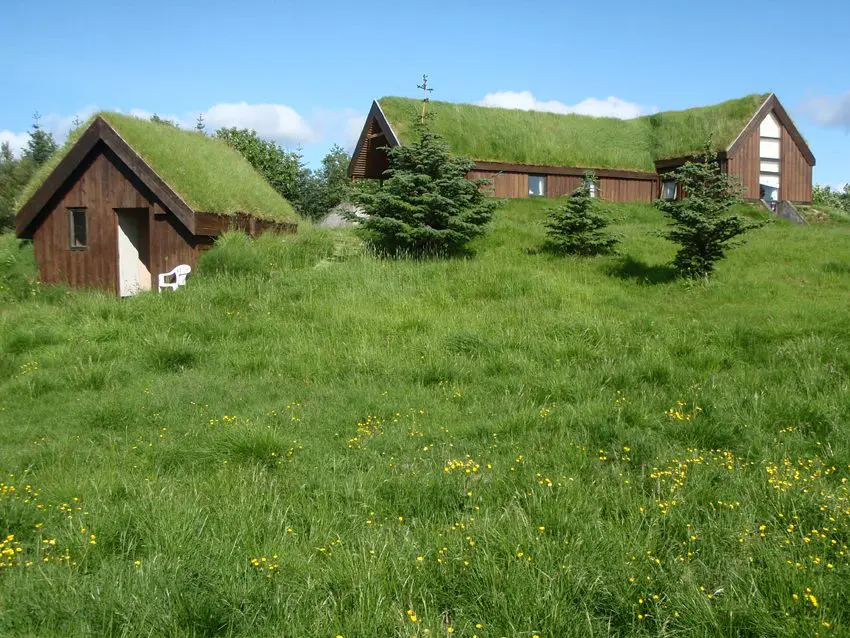
Our accommodations for the first and last nights were at the outfitters’ farm, which had the typical grass-covered roof.

On arrival night at our hosts’ farmhouse, we were asked to tell a bit about our riding experiences and the type of horse we enjoy riding most. Our guide Anita listened intently to our answers in order to assign each of us two horses to ride in the week ahead, her philosophy being that you must ride a horse three times before the two of you truly connect. The next morning after breakfast we assembled at the nearby corral, greeted by inquisitive eyes shining beneath thick bangs, seemingly as curious about us as we were of them. The barn doors slid open and the wranglers clapped their hands as the herd disappeared into the dark interior. A few minutes passed and the door opened again with a wrangler leading a mount out to each rider in turn. The tongue twisting Icelandic names of the horses were difficult to remember in the beginning. My first steed was Sleipnir, named after the eight-legged horse of the Nordic god Odin. At the age of 17 he was one of the older horses, but was quite forward, attentive and eager to please. Before the farmhouse was out of sight, I had relaxed and given this handsome bay with the thick black mane my full trust.

Iceland on horseback 5

Plutus and me

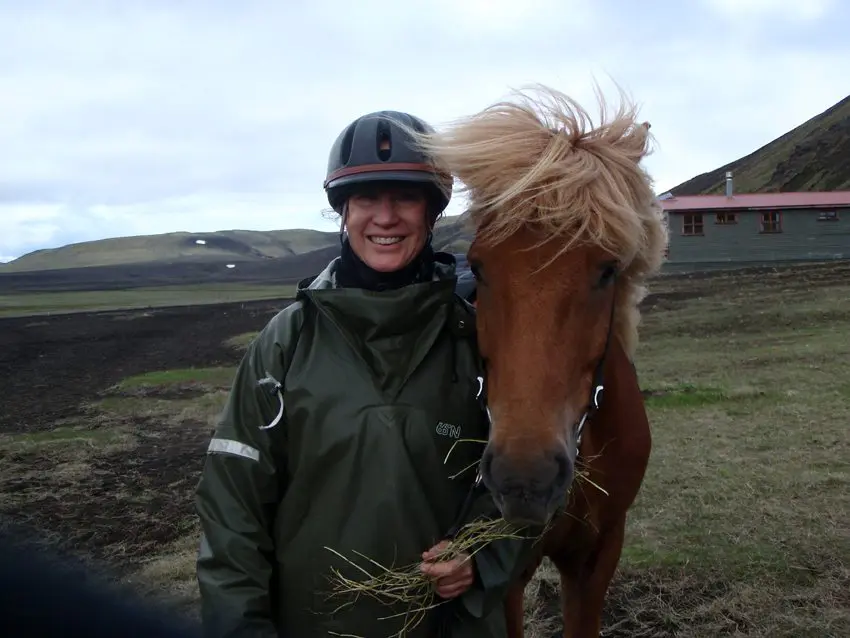
My other equine companion was a sorrel with a strawberry blonde mane by the name of Plutus, tall for an Icelandic horse at 15 hands. He was only seven years old, but even more mellow than Sleipnir, 10 years his senior. When I remarked on this trait to our host Stefnir, he commented that Plutus “has an old soul”. In addition, however, he also had the flying pace, skeid, which I was able to coax him into on several occasions and together we floated along at our own smooth pace while the more daring riders usually left us, quite literally, “in the dust” as they galloped past.

Iceland on horseback 6

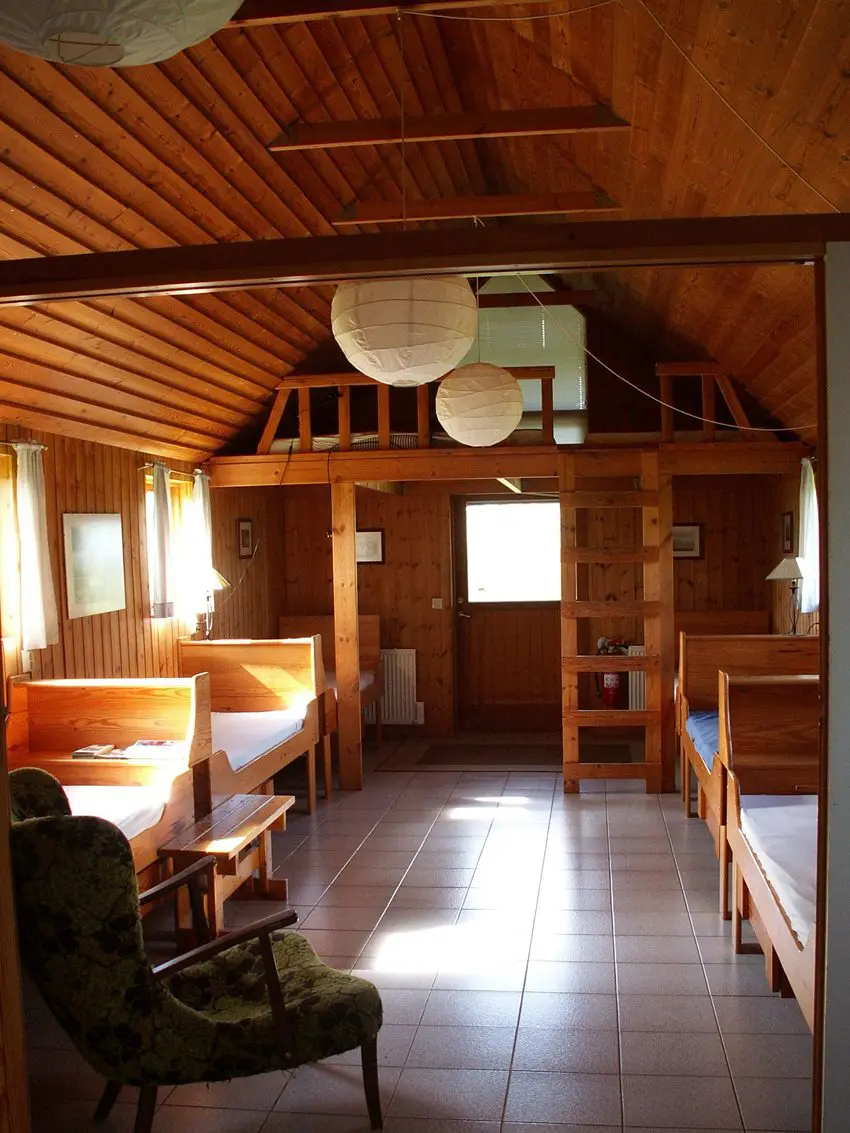
View of the hosts’ guests accommodations.

Those who have never been to Scandinavia or done the Youth Hostel rite of passage in Europe are sometimes taken aback when they see the sleeping arrangements in the cabins and huts along the ride route. Mattress to mattress, bunk-bed style platforms offer sleeping space upon which 16-20 people may roll out their sleeping bags. Of course, in an open room there can be night noises such as people climbing down the ladders in the dark, sleeping bags rustling when someone rolls over, snoring, as well as some folks talking (and even singing!) in their sleep. Anita has a supply of ear plugs available for those who sleep lightly. If you enjoy camping or roughing it, then you’ll do fine. There are flushing toilets at each overnight stop, as well as running water, but showers are only available in 2 of the 4 overnight locations, although there is an opportunity to soak in thermal springs as well as to shower one afternoon in Landmannalaugar. Touring Iceland on horseback is, in many ways, a “change of pace”.

Iceland on horseback 7

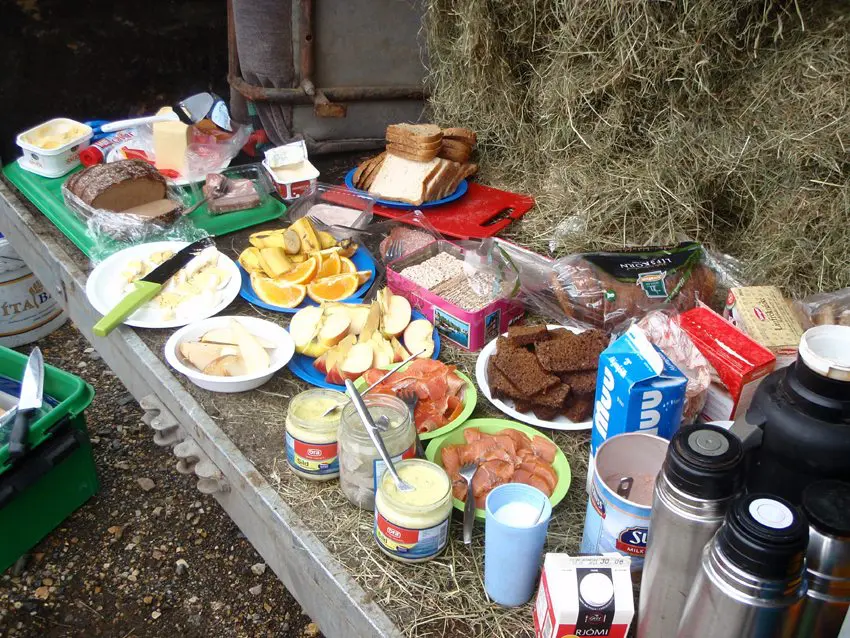
Smoked salmon and lamb, cheese and butter, a variety of breads and even special gluten free and vegetarian dishes were served at every meal.

In regards to food, Anita, Emilia, Elva and Nina were up daily before the guests preparing a buffet style breakfast consisting of muesli, fruit, yogurt, several kinds of homemade bread, jams, honey, and lots of the delicious Icelandic butter and cheese, washed down with ample coffee, tea and hot chocolate. After breakfast everyone would make their own “pocket lunch” for the ride consisting of sandwiches with sliced meats (including smoked lamb), cheese and vegetables, as well as fruit and cookies. Snacks appeared magically while the guests were getting out of their dusty gear at the end of the riding day, followed by freshly prepared warm meals of hearty soup, bread & butter, roasted lamb, fish, vegetables, stews, pasta dishes and desserts. Everyone pitched in with setting the table and washing up, family style.

There is no “cocktail hour” on this ride, no doubt for several reasons. For one, the converted Dodge Ram (lovingly nicknamed “Green Monster”) which transported all our belongings and food for the entire week was stuffed to the ceiling with absolute essentials and no room to transport additional bottles. Anita did surprise us on the trail with a shot of whiskey in our hot chocolate on one particularly cold and wet day, as well as a box of red wine (equivalent to 4 bottles) the night of our farewell dinner. It is possible to purchase beer at the stopover in Landmannalaugar, but other than that, this tour is dry.

Iceland on horseback 8

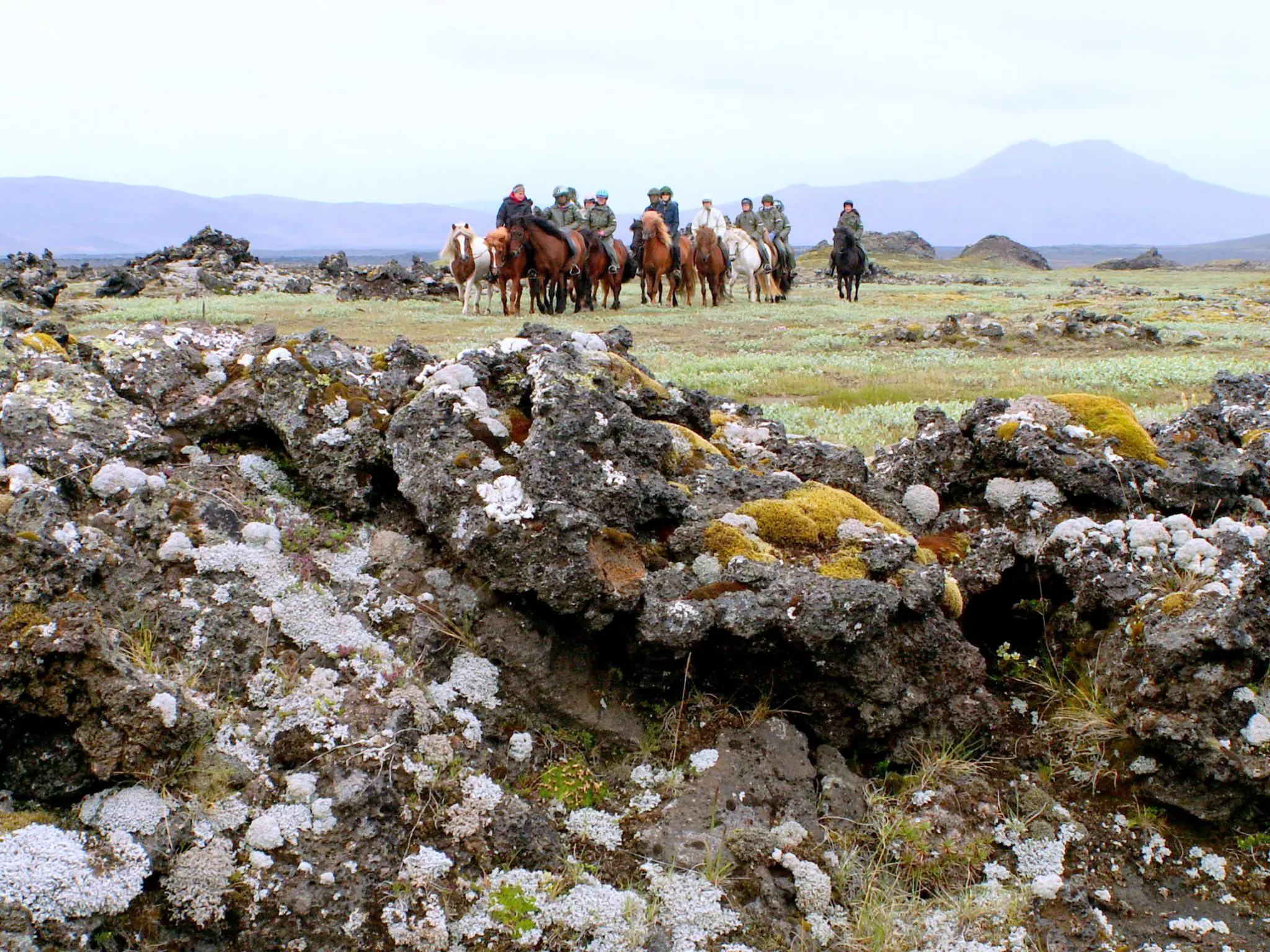
Riding through a lichen-covered field of rocks.

Anita had long wanted to offer a designated “all women’s ride”, and it was very interesting to observe the women of diverse ages and cultures interact. The common denominator, as usual on such rides, was horses. We shared our tales of falls and injuries, competitions, places we had ridden in the past and dreams of future rides over supper every evening. We had the great fortune of all being more or less competent equestrians, and no one came off their horse during the week. I’ll certainly give my kudos to Sleipnir and Plutus, who never stumbled or shied while moving along confidently with the herd of free-running horses that accompanied us.

Ranch Horseback riding vacations 5

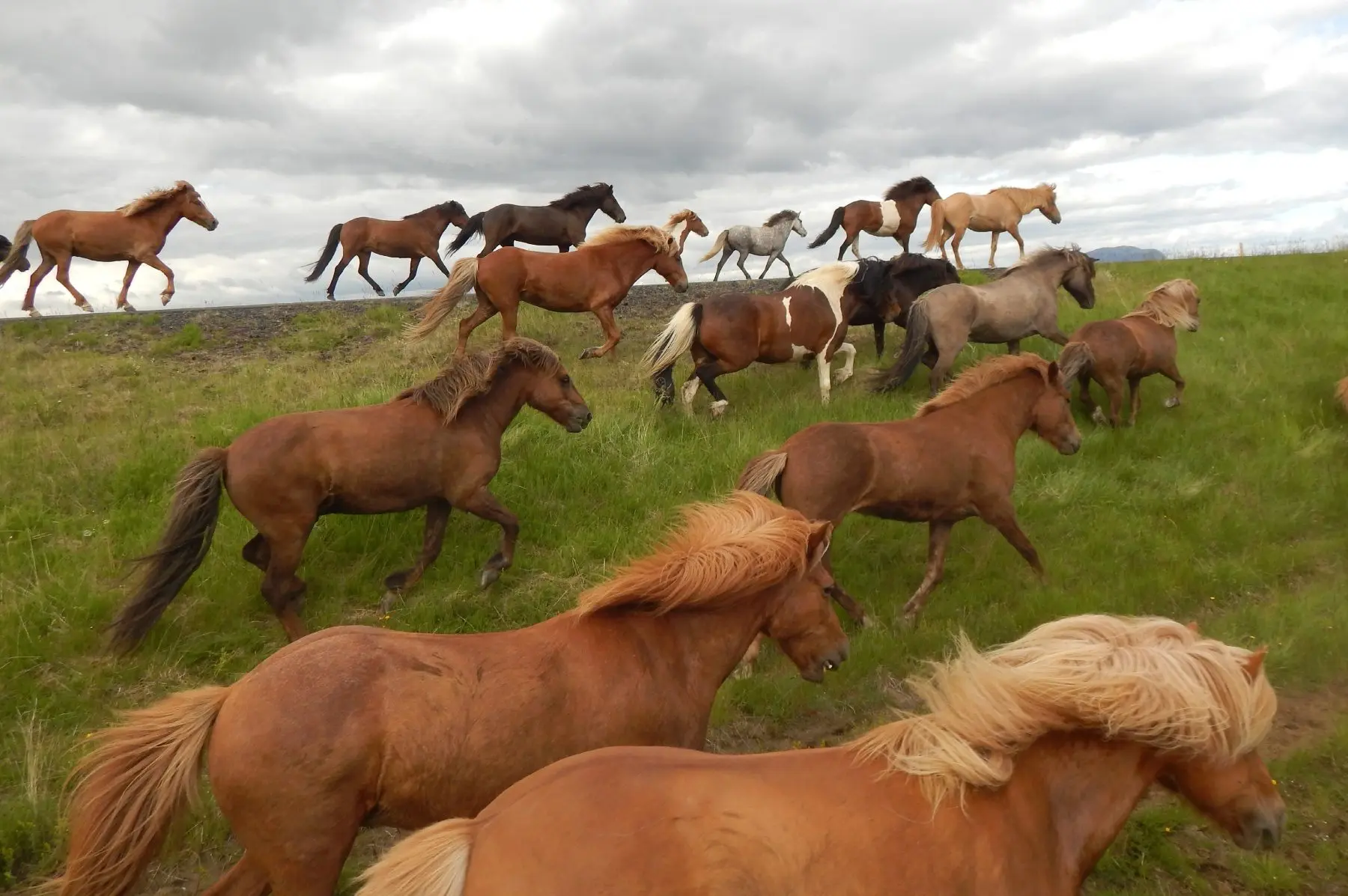
To ride with a herd of free running horses was a memorable experience

Now that was an experience! Riding with a herd of free horses mixed amongst the riders, tölting along with luxurious manes and tails flying, accompanied by the four-beat sound of hooves pounding the volcanic soil, clipping over paved roads, splashing through rivers, striking rocks. Since the Icelandic horses are raised in this rugged environment, they know how best to navigate it. This particular horse herd is very familiar with the ride route and knows where to stop, wait, slow down, or go full throttle. After a very short time, I was able to totally relax and be one with my horse in this colorful tölting procession. It’s a remarkable experience for sure.

Iceland on horseback 10

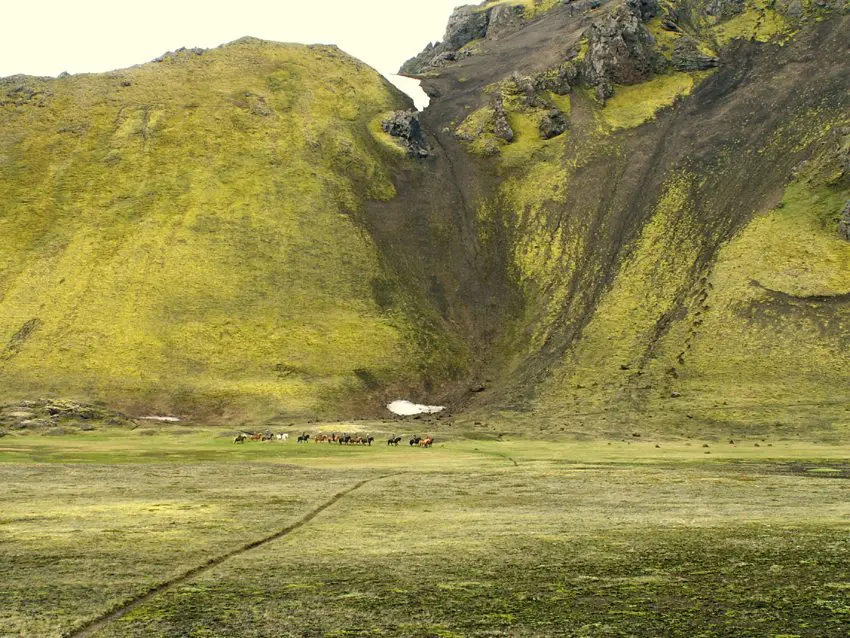
We felt very small sometimes upon the landscape of Iceland.

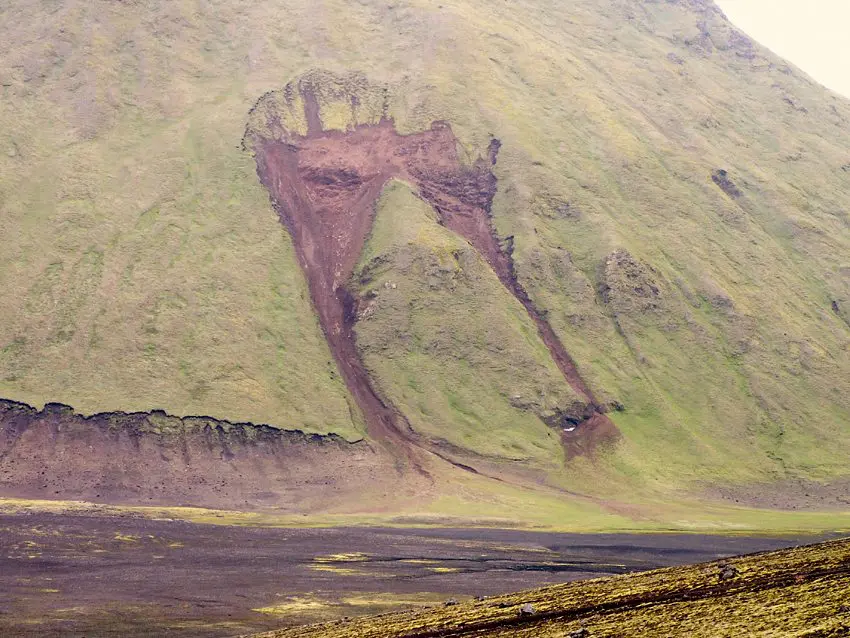
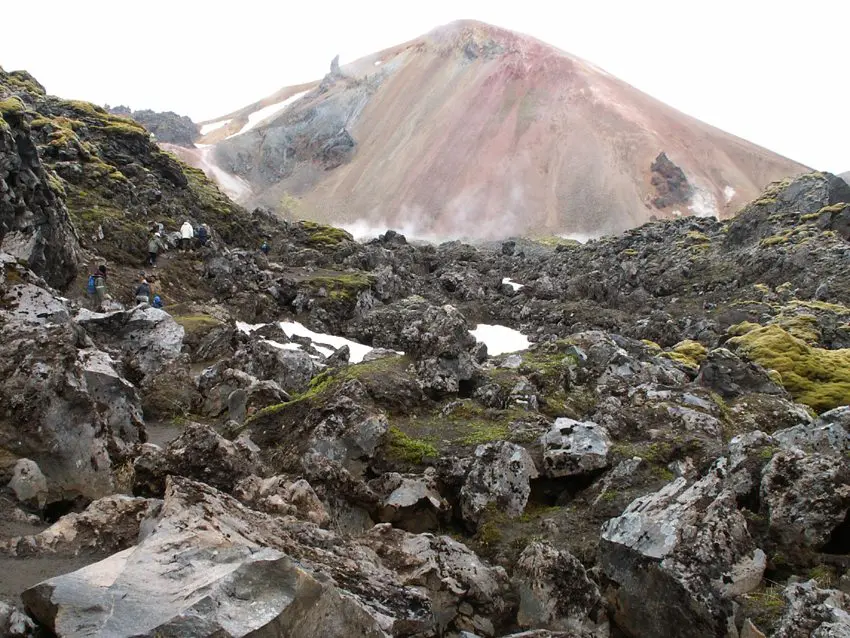
We left the herd at a base camp on the days we ventured into the remote areas of the highlands. Climbing high to the rims of black and red craters filled with turquoise lakes, galloping over the black crater floors of extinct volcanoes, leaving temporary tracks of our existence in the wind-swept surface, riding quietly as tiny specks against the massive mountains around us…Iceland can make a person feel very small but very strong at the same time.

Iceland on horseback 10

Bizarre land and rock formations support the belief in trolls and ghosts in Iceland.

Iceland on horseback 11

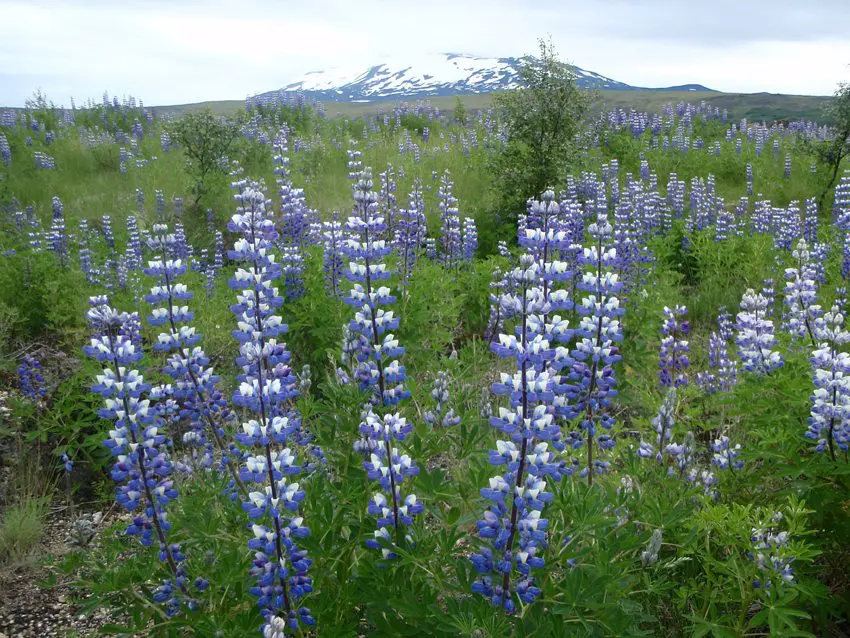
The lupines were in bloom in June at the base of the volcano Hekla

The Icelandic women are remarkable, physically and in spirit. They can shoe horses, change flat tires, bake and cook and explore mountaintops, live at the foot of active volcanoes, sing folk songs, raise children and slaughter lambs, all the while being warm and gracious to strangers. Their strength was evident to us during our summer ride. I can only imagine the trials of surviving winter on the island, which brings us back to the chillingly beautiful song sung to our group by Anita and Elva as we entered the desolate and mysterious highland area where there is no food, shelter or lodging and where the basalt formations  and mountain features take on the shape of trolls and monsters in the mists.KONICA MINOLTA DIGITAL CAMERA

To enjoy a ride over this sometimes verdant but more often stark topography, riders must have the willingness to give up their creature comforts for a week in return for an in depth experience in one of the most unusual places on earth as seen from the strong backs of the dependable Icelandic horses. In my case, the reward was the ride of a lifetime.

Ride review by Trudy Trevarthen

Adventurous Horseback Riding in Oregon

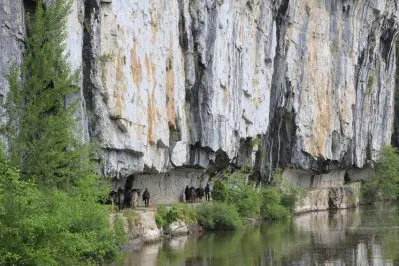
A Celebratory Ride in France

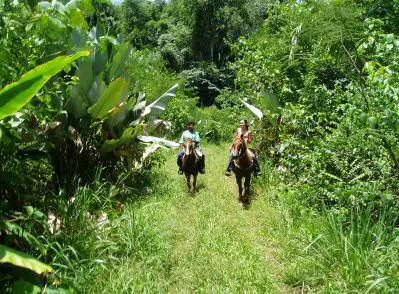
Trading Winter for a Spring Jungle Ride

The Incredible Tuli Ride Safari

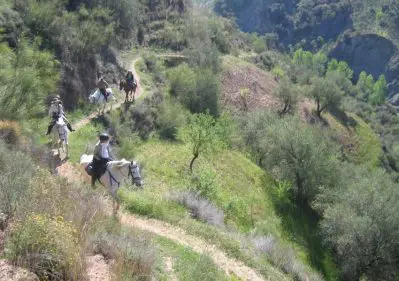
Mountain Riding in Spain

On Castles, Caves and the French Malbec Trail

A History of Horseback Riding in Wyoming

Kalahari Bush Ride

Journal of George Richardson in Tanzania, January 2014

History of Horseback Riding in France

Africa Ride and wildlife viewing

Africa Ride: Lake Natron and the Serengeti

Loading Articles...